What Are Backlinks? A Plain-Words Answer for Beginners
A plain-words explanation of backlinks for beginners, with real numbers on rarity, referring domains, and the AI search angle.

66.31 percent of pages on the web have no backlinks at all. That figure comes from an Ahrefs study of about 1 billion pages in 2020, and it is a good place to start, because it tells you two things at once. First, a backlink is rarer than most beginners think. Second, earning even a few of them puts a page ahead of most of the web. If you have ever wondered what are backlinks and why people who work on websites talk about them so much, this guide answers in plain words, with real numbers, no jargon left unexplained, and an honest look at what links can and cannot do for a page in 2026, including in AI search answers.
What are backlinks in plain words
A backlink is a link on an external site that points to a page on your site. If a food blog links to your sourdough recipe, that is a backlink to your recipe page. If a news site links to your research, that is a backlink to your research page. The link itself is the backlink. The clickable text on it is the anchor text. The site that links to you is the referring domain. Google's own "How Search works" ranking page describes it in the same plain way: Google tries to understand whether other prominent websites link or refer to your content, and that is generally a good sign the information is trustworthy. So when you ask what are backlinks, the short answer is that they are recommendations from one site to another, written as links.
Google uses links in two ways, and both matter. First, crawlers follow links to discover new pages. A link from a page Google already knows can lead its crawlers to a page they had not found yet. Second, ranking systems read links as a trust signal. Google's guide to qualifying outbound links explains the labels a site can add to a link it publishes. A page that other sites link to looks, to Google, like a page worth showing. Neither use is a guarantee. A link does not force Google to index a page, and it does not force a page to rank. But links are one of the oldest signals in search, and they remain part of how Google decides which pages deserve attention. Think of a backlink as a citation in a book. One citation from a respected author carries weight. A hundred citations from books nobody reads carry far less.
Backlinks and referring domains: the counting rule
Beginners often mix up two counts, and the difference matters more than the total. A backlink is one link. A referring domain is one site that links to you. The counting rule, as Ahrefs explains in its backlink checker guide, is simple: one site linking to you 20 times gives you 20 backlinks and 1 referring domain. Twenty sites linking to you once each gives you 20 backlinks and 20 referring domains. Same number of links, very different picture. Referring domains are usually the stronger signal, because twenty independent sites choosing to link to you says more than one site linking twenty times.
A study by StructuraWP, measuring 55 domains on 2 October 2026, found the median site had about 5 backlinks per referring domain. That is a useful sense of scale. Most sites do not get hundreds of links from one domain. They get a handful of links from each site that links to them, and the count of different sites grows slowly. Anyone who asks what are backlinks in practice should learn this counting rule first. When you check your own site, look at the referring domains first. A site with 50 backlinks from 40 domains is in a healthier position than a site with 50 backlinks from 2 domains, even though the headline number is the same. Keep that rule in mind through the rest of this guide, because every number that follows makes more sense once you know which count it describes.
What the numbers say: how rare links really are

The data on backlinks is striking, and it all points the same way: links are scarce, and traffic is scarcer still. The Ahrefs study of about 1 billion pages in 2020 found 66.31 percent of pages have no backlinks at all. A later Ahrefs study, in December 2023, looked at about 14 billion pages and found 96.55 percent of pages get no traffic from Google. Those two figures describe different things, but together they sketch the shape of the web: most pages are never linked to, and most pages are never visited from search. A third figure adds the time dimension. A study of 2 million pages found only 5.7 percent of newly published pages reach the top 10 within a year. Ranking takes time, and it takes links, and most pages get neither quickly.
The top of the results page shows the same pattern from the other side. A Backlinko study of 11.8 million Google results found the page in first place holds on average 3.8 times as many backlinks as the pages in positions 2 to 10. Ahrefs ran a test in January 2025 across the top 1 million US search terms and put the same 3.8 times figure on the number one result. Read those numbers carefully. They describe what the winning page looks like, not what caused it to win. Anyone asking what are backlinks should remember the rarity first: most pages have none, so a few real links are a real advantage. A page can hold many backlinks because it is good, and it can rank because it is good, and the links and the ranking can both follow from the quality. The numbers still tell you something useful: pages that rank first are usually pages other sites have chosen to link to, and the gap between first place and the rest is large. For the process of earning those links, rather than the definition of the link itself, see the guide to what is link building, which covers the work behind the links.
Do backlinks still matter, and what the correlations show
Every figure in this section is a correlation, never proof that links cause a ranking, and that warning matters more than any single number. Ahrefs tested the link between links and rankings in January 2025 across the top 1 million US search terms. Referring domains showed the strongest link correlation with rankings, at 0.255 Spearman. Total backlinks came next at 0.248. Domain Rating, the authority score of the linking site, came in at 0.131. The numbers are small because rankings depend on many factors, but the order matters: different sites linking matters slightly more than total links, and both matter more than the linking site's authority score alone. An Ahrefs study from 2024, covering about 920 million pages, found the same ordering. That consistency across two large studies is worth more than either number on its own.
Semrush added a different view in its 2024 Ranking Factors Study. Top 10 pages averaged 112 referring domains at page level, with a median of 6, and 2,418 backlinks at page level, with a median of 13. The gap between the average and the median tells you the distribution is lopsided: a few pages hold enormous numbers of links, while the typical top 10 page holds far fewer. The median is the number to remember. A typical page in the top 10 holds about 6 referring domains and 13 backlinks at page level. That is a reachable number for a good page in a normal niche. The order matters for anyone asking what are backlinks as a ranking question: different sites linking matters slightly more than total links, and both matter more than the linking site's authority score alone. If you want the full explanation of the referring domain count, read referring domains explained. For the question of whether links still matter at all in 2026, the guide do backlinks still matter works through the evidence in detail.
What are backlinks worth in AI search answers
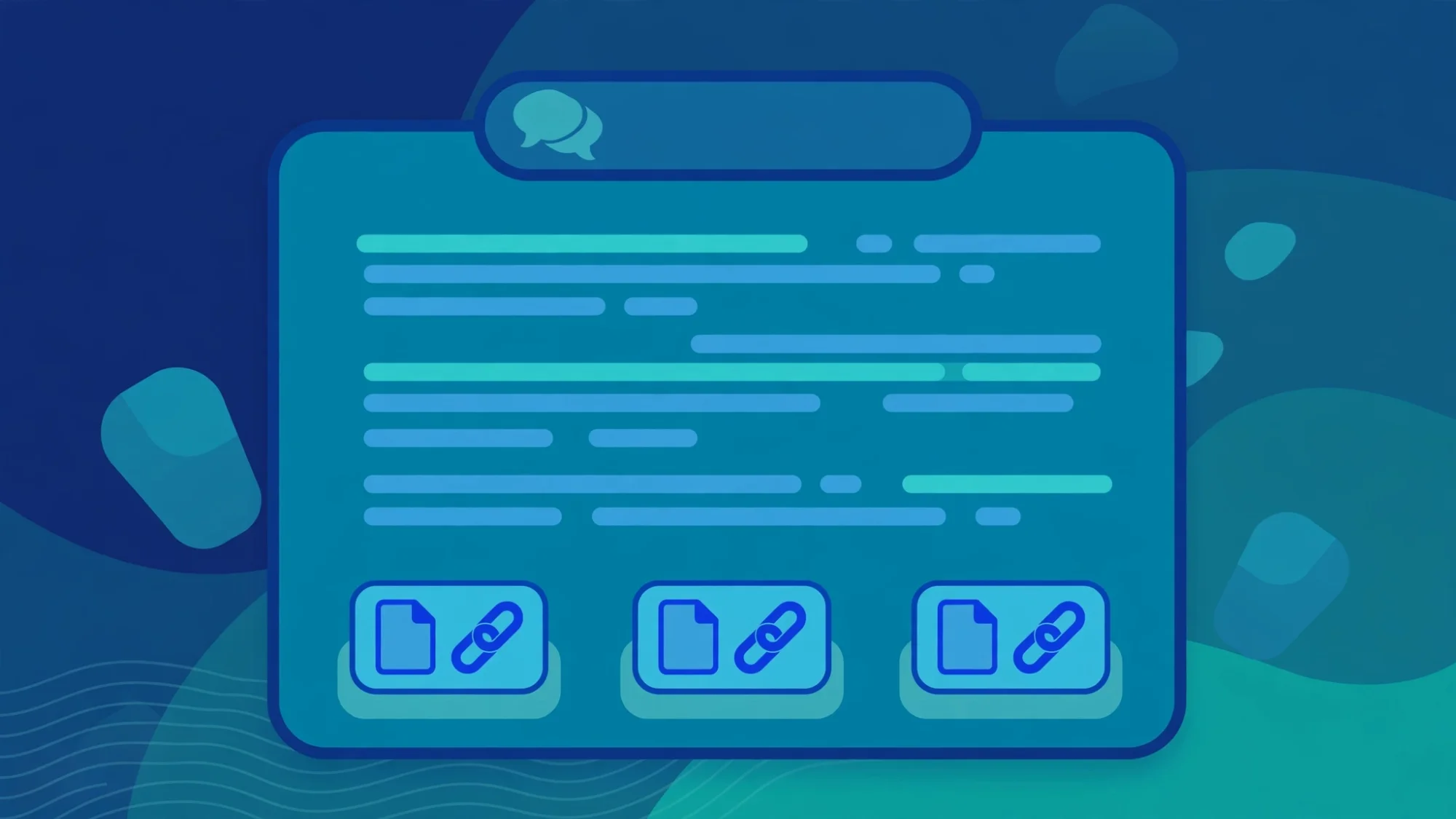
Search is changing, and the change matters for anyone asking what are backlinks in 2026. When a person asks a chatbot or an AI Overview a question, the answer is assembled from pages the system retrieves, and the system has to decide which pages to trust. Links are part of that decision, but not in the way many people assume. An Ahrefs study from December 2025, covering 75,000 brands and updated in August 2026, found brand mentions on the web correlate strongly with mentions in AI answers, at 0.709 for AI Mode. Domain Rating correlated only 0.266 to 0.326, and raw backlink count correlated very weakly. Say it plainly: in AI answers, links mostly work indirectly. They help pages rank and therefore get retrieved, and media outlets that carry them are often cited as sources. It is context, not volume, that counts.
What does that mean in practice? A mention of your brand on a real site, in a real article, matters for AI answers even when the link carries no ranking credit. A page that is cited as a source by a publication people trust is more likely to be retrieved than a page with a hundred links from sites nobody reads. The old habit of counting links is a poor guide to AI visibility. That is the short answer to what are backlinks in the age of AI answers: context, not volume. The better habit is to ask whether real publications talk about your site, whether your pages are the kind of source an answer would cite, and whether the context around each mention is relevant to the question being asked. A single link from a real, relevant, read publication beats 100 spam links, in classic search and in AI answers alike. For the plain link itself, and what makes one valuable, see the guide to dofollow backlinks.
A worked example: one guide, three months
Here is an illustration, not a promise, of how links accumulate for a beginner. Imagine you publish one useful guide, a clear explanation of a topic your audience searches for, and you do nothing except share it where people discuss the topic. Over three months it earns 5 links from 5 different sites. That is 5 backlinks and 5 referring domains. Now imagine a different guide earns 5 links from 1 site. That is also 5 backlinks, but only 1 referring domain. By the Ahrefs correlation ordering, the first pattern is stronger: referring domains correlate with rankings at 0.255, slightly ahead of total backlinks at 0.248. Five different sites choosing to link to you says more than one site linking five times.
Set the patience figure beside it. Only 5.7 percent of newly published pages reach the top 10 within a year, so a guide with 5 referring domains after three months is a normal start, not a failure. This is the pattern to picture when you ask what are backlinks in real life: a few sites, slowly, over months. The guide is doing what new pages do: earning a few links, slowly, from sites that found it useful. Buying 100 links to speed it up is what this article warns against. A hundred bought links would push the backlink count up and the referring domain count up, and would still be a hundred bought links under Google's spam policy. The honest path is slower and cheaper: one useful guide, a few real links, and time. If the guide is genuinely useful, the second guide earns links a little faster, and the third faster still, because each new page starts from a site that already has a few links pointing to it.
How to earn your first backlinks, step by step
Earning a first backlink is a practical job, and it helps to treat it as a short list of steps rather than a mystery. If you are still asking what are backlinks in practical terms, earning one is the fastest way to learn. Step one: publish one page that is genuinely useful to a real person, with a clear answer, a worked example and no filler. A page that only repeats what ten other pages say will not earn links, because nobody needs to link to the eleventh copy. Step two: find the five sites, forums or newsletters where people who care about the topic already gather, and read what they link to. That tells you what kind of page earns links in your topic. Step three: share your page there once, in a place where it answers a question someone actually asked, and say plainly what it covers. Do not drop the link into ten threads at once. One honest share beats ten spammy ones.
Step four: look for pages that already link to similar content and are out of date. If a page links to a broken guide on your topic, write to the site owner, point out the broken link, and mention your page as a working alternative. Keep the message short and do not ask for a link directly. Step five: check who links to your competitors and ask whether your page would serve those readers better. If it would not, improve the page first. Step six: repeat the process with a second page, and keep a simple sheet of every link you earn, with the referring domain, the date and the anchor text. After three months you will know which pages earn links and which do not, and that is the most useful information you own. The work is slow, and the slowness is the point. Links earned slowly from real sites are the ones that last.
Honest limits: what backlinks cannot do for you
The limits deserve a plain statement. Every figure in this article is a correlation, never proof that links cause a ranking. A page can hold many backlinks and still rank badly if the content does not answer the search, and a page with few backlinks can rank well in a quiet niche where nobody else has written a good answer. There is no magic number of backlinks. It depends on the competition, and the competition for a local bakery guide is nothing like the competition for a credit card guide. The AI answer figures are correlations across 75,000 brands, not a guarantee that any one page will be cited. That is the honest answer to what are backlinks and what they cannot do. A single link from a real, relevant, read publication beats 100 spam links, and a bought link is still a bought link under Google's spam policy, whatever the seller calls it. Links help a good page get found and trusted. They cannot rescue a page nobody wants to read, and they cannot replace the work of writing something worth citing.
Frequently Asked Questions
What is a backlink in simple words?
A backlink is a link on another website that points to a page on your website. It is a recommendation from one site to another, written as a link. If a blog links to your guide, your guide has one backlink from that blog. That is the whole idea behind what are backlinks, and everything else in this guide is detail about counting them, earning them and judging their value.
What is the difference between a backlink and a referring domain?
A backlink is one link. A referring domain is one website that links to you. One site linking 20 times gives you 20 backlinks and 1 referring domain. Twenty sites linking once each gives you 20 backlinks and 20 referring domains. Referring domains are usually the stronger signal, because twenty independent sites linking to you says more than one site linking twenty times. That is the counting rule behind what are backlinks.
How many backlinks do I need to rank?
There is no fixed number. It depends on the competition for the keyword, the quality of your page and the links your competitors hold. Anyone asking what are backlinks for a ranking target should check the competitors first. The median top 10 page in the Semrush 2024 study held about 6 referring domains and 13 backlinks at page level, but that is a median across many topics, not a target for your page. Check the pages that already rank for your keyword, count their referring domains, and aim to earn links gradually until your page is competitive.
Do backlinks still matter in 2026?
Yes, but as one signal among many, not as the whole game. The Ahrefs January 2025 correlations put referring domains at 0.255 and total backlinks at 0.248, ahead of Domain Rating at 0.131. Links still correlate with rankings, and they still help crawlers discover pages. That is the measured answer to what are backlinks worth in 2026: useful, but not the whole game.
How do I get my first backlink?
Publish one genuinely useful page, then share it once where people who care about the topic already gather, in a place where it answers a question someone actually asked. Look for broken links on pages about your topic and tell the site owner, mentioning your page as a working alternative. Do not buy links and do not drop your link into ten threads at once. One honest link from a real site is a better start than a hundred bought ones, and that first honest link is the best practical lesson in what are backlinks.
Do backlinks help with AI search results?
Mostly indirectly. The Ahrefs study of 75,000 brands found brand mentions correlate strongly with mentions in AI answers, at 0.709 for AI Mode, while raw backlink count correlates very weakly. Links help pages rank and therefore get retrieved, and media outlets that carry them are often cited as sources. It is context, not volume, that counts, so a mention on a real, relevant publication matters more for AI answers than a large number of links from sites nobody reads. That is how what are backlinks works in AI search: indirectly, through ranking and retrieval, not as a direct vote.
Order guest posts on reviewed websites with honest metrics, or list your own site and get paid.
Join RankPublish