White Label Link Building for Agencies: How It Works and What to Charge Clients
White label link building explained for agencies: how it works, what providers charge, what to charge clients, and how to pick a partner you can trust.

Your agency just signed three new SEO clients in one month. Each one needs links, and each one needs them soon. Your team is already stretched, hiring takes months, and turning the work away means losing the retainers. This is the exact moment most agencies discover white label link building.
White label link building means another company does the link building work while your agency takes the credit. The provider finds the sites, writes or places the content, and secures the links. You report the results to your client under your own brand. Your client never sees the provider's name, and the provider never contacts your client.
Done well, it lets a small agency sell a service it could never deliver in house. Done badly, it puts low quality links on your client's site and your reputation takes the hit. This guide explains how the model actually works, what it costs, what you should charge your clients, and how to choose a partner you will not regret. The quality bar your partner should meet is the one in our guide to editorial links.
What white label link building actually is
White label is a familiar idea in other industries. A supermarket sells coffee under its own label, but a roastery produced it. A design agency sells a website, but a freelance developer built it. White label link building works the same way, with links as the product.
A specialist provider runs the outreach, negotiates with site owners, and arranges placements. Your agency buys those placements at a wholesale rate, adds its margin, and sells them to clients as part of its own SEO service. Reports, dashboards, and even the email address the provider uses can all carry your branding.
The key difference from simply outsourcing is the invisibility. With ordinary outsourcing, the client may know a freelancer is involved. With white label, the provider stays completely behind the curtain. That is the whole point, and it is also the risk: if the provider cuts corners, your agency owns the consequences in front of the client.
How the process works, step by step
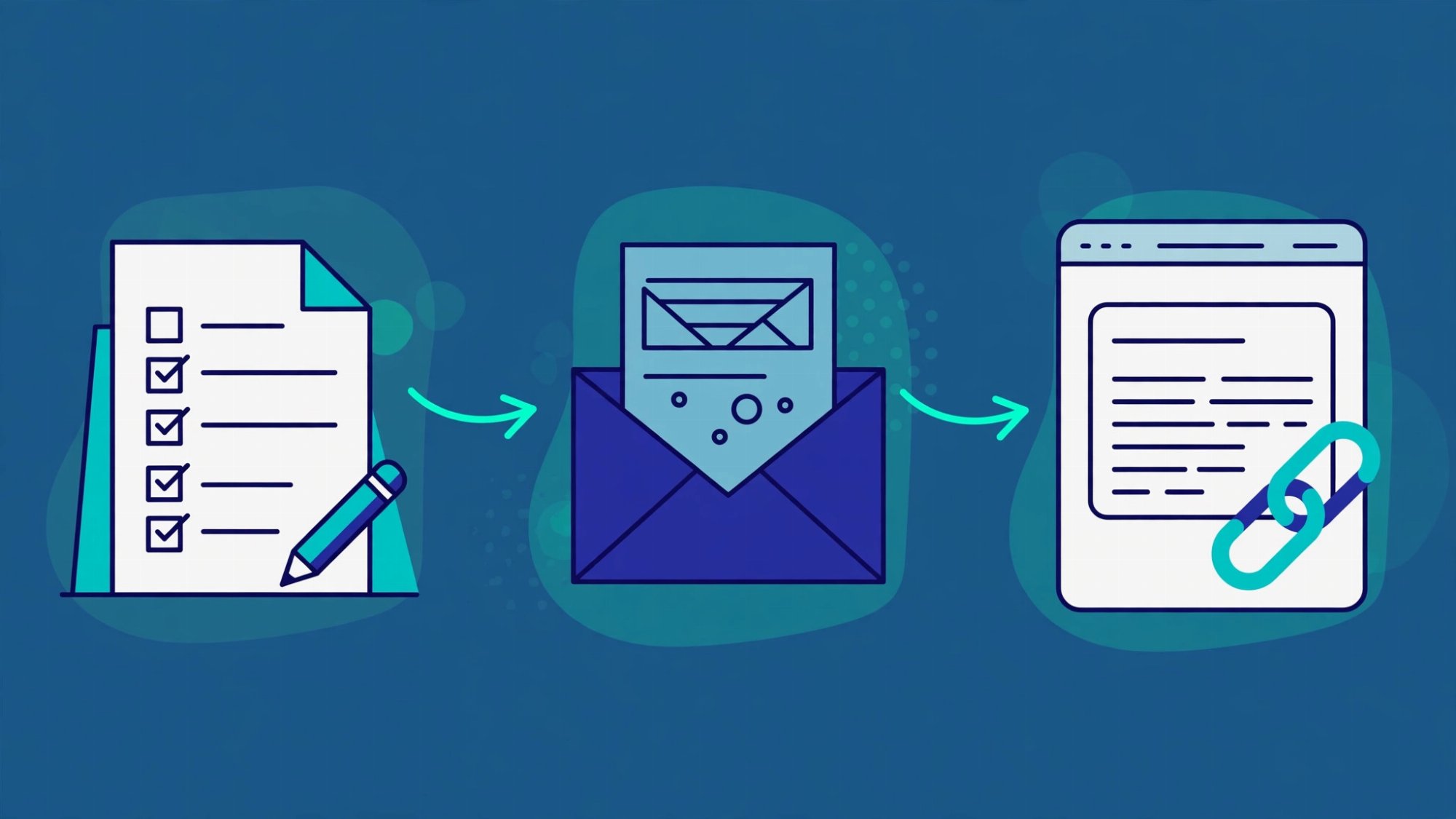
Most white label arrangements follow the same six steps, and understanding them helps you spot where a provider is doing real work and where it is not.
Step one is the brief. You tell the provider the client's website, the pages that need links, the target keywords, and any topics or sites to avoid. A good provider asks questions here. A bad one accepts anything without a word.
Step two is prospecting. The provider finds websites that are relevant to the client's niche, have real traffic, and accept guest posts or link placements. This is the step that separates serious providers from resellers of the same tired list of sites. Ask to see sample prospects before you commit.
Step three is outreach and negotiation. The provider contacts site owners, agrees a topic, and confirms the price of the placement. Some providers write the content themselves, others expect you to supply it. Clarify this before you sign anything.
Step four is content and placement. The article is written, the link is placed inside it, and the page goes live. You should receive the live URL for every single link, not a monthly spreadsheet with vague domain names.
Step five is quality control and reporting. The provider should check that the link is live, points to the right page, and uses the agreed anchor text, then send you results in a format you can pass to your client, ideally branded with your agency's name and logo.
Who uses white label link building
Three kinds of agencies use this model most.
Small agencies use it to offer link building without hiring. A two person agency cannot run outreach for ten clients, but it can manage a white label partner and keep the client relationship.
Growing agencies use it to handle overflow. They have an in house team for their biggest clients and send the rest to a white label partner. The risk here is inconsistency: clients on the white label track sometimes get visibly different link quality from clients on the in house track, and clients do notice.
Large agencies use it for specific niches or languages. An agency strong in English SEO might white label German or Spanish link building rather than hire native outreach staff. Here the provider is a specialist, not a shortcut, and the quality is often higher than the agency could produce itself.
What white label link building costs
Pricing varies widely, and the range tells you a lot about what you are buying.
Per link pricing is the most common model. A single placement on a small but real niche blog might cost 80 to 150 dollars wholesale. A placement on a mid sized site with genuine traffic usually runs 200 to 400 dollars. A placement on a well known publication can cost 800 dollars or more. If a provider offers you links on sites with real authority for 40 dollars each, something is wrong. Either the sites are not what they claim, or the links will not last.
Monthly packages are the second model. A provider might offer five links a month for 1,000 dollars, or ten links a month for 1,800 dollars. Packages look cheaper per link, but check what is included. Some packages count any live link, including low value directory or forum links, toward the total.
A third model is a flat monthly retainer for a set amount of outreach work rather than a fixed number of links. This suits agencies that want steady activity and are comfortable with some months producing more links than others.
What to charge your clients

Your client price needs to cover the wholesale cost, your management time, and your margin, while still looking like fair value next to what the client could buy directly.
A common approach is a markup of 50 to 100 percent on the wholesale cost. If a link costs you 200 dollars, you charge the client 300 to 400 dollars for it. That sounds like a lot until you add up what the client is really paying for: your strategy, your vetting of the provider, your reporting, and your accountability if a link goes wrong.
Retainers are usually cleaner than per link billing. Sell a monthly link building package: for example, 1,500 dollars a month for four to six quality placements, reporting included. Clients prefer predictable invoices, and you prefer predictable revenue. Just make sure the package promises a range, not an exact number, because outreach results vary month to month.
Another option is to fold link building into a wider SEO retainer and not price it separately at all. The client pays 3,000 dollars a month for SEO, and link building is one line inside it. This works well for agencies that want the client to judge results, not count links. The danger is scope creep: without a clear link target, clients may expect ten links a month on a budget that buys three.
How to pick a white label partner
Choosing a provider is the decision that matters most, because your client's rankings ride on it. Vet providers the way you would vet an employee who handles your best client.
Ask for live samples, not a sales deck. Any provider can show a slide with impressive logos. Ask for five links they placed in the last month, on sites in your client's niche, and check them yourself. Visit the sites. Read the articles. Check whether the sites have real traffic and real readers, and whether the article would exist without the link in it.
Ask how they find sites. Providers that rely on a fixed list of partner sites will place your clients on the same sites as everyone else's clients, which creates obvious patterns. Providers that prospect fresh for each campaign cost more and deliver links that look far more natural.
Ask about link permanence. What happens if a link is removed after two months? A serious provider replaces it free or refunds the cost. Get the replacement policy in writing.
Ask about content quality. Who writes the articles, and can you see samples? Thin, generic content around your client's link is a red flag. It tells Google the page exists for the link, not for readers, and that is exactly the pattern Google's spam policies warn against.
Ask about communication. You need a single point of contact, a clear turnaround time, and a way to pause a campaign quickly if a client leaves.
Finally, start small. Give a new provider one client, or one small campaign, and judge the first five links before you hand over more. A provider that earns a bigger share of your work is a partner. A provider that demands a big commitment upfront is a sales pitch.
The risks agencies underestimate
The biggest risk is quality drift. A provider delivers strong links for the first month to win your trust, then quietly shifts to cheaper sites. The only defence is to check every link yourself, every month, for as long as the relationship lasts.
The second risk is pattern. If ten of your clients all get links from the same twenty sites, that footprint is visible. Rotate providers, or insist your provider prospects fresh sites for each client.
The third risk is a client finding out. White label only works while the client believes the work is yours. If a site owner emails your client directly, or a report leaks the provider's name, the trust damage is real. Make sure the provider's contracts include a strict non disclosure clause and that they never contact your clients.
The fourth risk is overpromising. Agencies sometimes sell a client twenty links a month, then discover the provider can only deliver eight good ones. Sell what you can actually deliver, and set expectations the provider can meet.
Our comparison of guest posting services shows how widely placement quality varies between providers selling what sounds like the same service, and the vetting questions in that article apply word for word to white label providers too.
Frequently asked questions
Is white label link building legal?
Yes. Outsourcing work under your own brand is a normal business arrangement. What matters is the quality of the links and whether they follow Google's guidelines, not who performed the outreach.
How much should an agency charge for white label link building?
Most agencies charge clients 1.5 to 2 times the wholesale cost of the links, or fold link building into a monthly SEO retainer of 1,500 to 3,000 dollars and up. The right number depends on your market, your client size, and how much management and reporting you provide.
Can clients tell the links are white label?
They should not be able to, as long as the provider uses your branding on reports and never contacts the client. The links themselves look identical to links built in house. The giveaway is usually quality: if the links are poor, the client will ask questions no branding can answer.
How do I check the quality of a white label provider?
Ask for five recent live placements in your niche, visit the sites yourself, and check their traffic and content quality. Then start with a small trial campaign and inspect every link before you scale up.
The bottom line
White label link building is a practical tool, not a magic trick. It lets your agency sell a service it could not deliver alone, serve more clients, and grow without hiring ahead of revenue. It works when you treat the provider as a supplier you manage, check every link, and price the service honestly.
It fails when an agency hands over the whole function and stops looking. The provider is not your employee, and it does not share your incentive to protect the client relationship. Your job is strategy, vetting, and quality control. The provider's job is execution. Keep those roles clear, start small, and scale only with a partner whose links you would be proud to show a client.
If you are building the outreach side of your own operation instead, our list of HARO alternatives is a good place to start finding expert quote opportunities that earn links without paying for placements at all.
Order guest posts on reviewed websites with honest metrics, or list your own site and get paid.
Join RankPublish