Black Hat Link Building: The Tactics, the Penalties and the Warning Signs
A cheap package of links can look like a bargain until Google spots it. This guide explains what black hat link building is, what it costs when it is caught, and how to spot it before it touches your site.
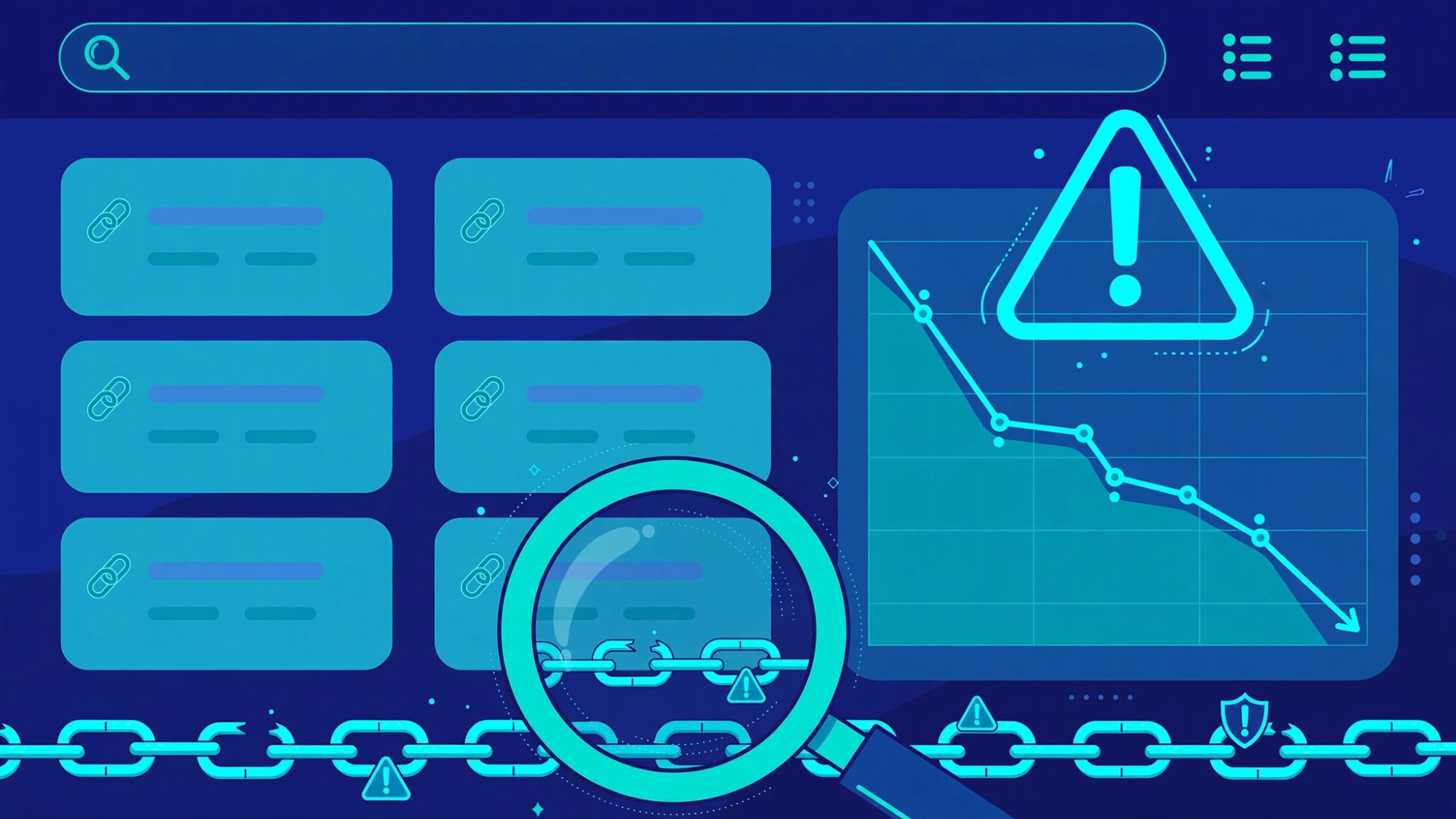
Picture this. You run a small online shop, and traffic has been flat for months. Then an email lands in your inbox: a hundred high authority backlinks for 500 dollars, delivered in two weeks, guaranteed rankings. The sender has a slick website and a price far below real outreach. That email is the most common way site owners walk into black hat link building, and most of them only find out what they bought when the traffic graph falls off a cliff.
Black hat link building means gaining links through methods that break Google's spam policies, instead of earning links through content people genuinely want to link to. The links are bought, swapped at scale, hidden, automated, or placed on sites that only sell links. The goal is always the same: to trick a search engine into thinking a site is more trusted than it really is. This article is a warning, not a manual. It names the tactics so you can recognise them, explains what happens when Google catches them, and gives you practical steps for spotting them, checking your own site, and recovering. It will not tell you how to run any of these tactics.
What Black Hat Link Building Actually Means
Google's spam policies draw a clear line, and black hat link building sits on the wrong side of it. The policies list buying or selling links that pass ranking credit, excessive link exchanges, automated link building programs, advertorials with followed links, keyword rich links in widgets or templates, and optimised links in forum signatures. The March 5, 2024 core update added expired domain abuse, scaled content abuse, and site reputation abuse. If a tactic is designed to manufacture ranking credit instead of earning it, it is black hat link building, whatever the seller calls it.
The distinction that matters most is intent. A link you earn because someone found your guide useful is a vote of confidence. A link you buy from a site that sells the same link to fifty other businesses is a transaction dressed up as a vote. Google looks at patterns, not single links. One paid link on an otherwise clean profile rarely sinks a site. A hundred links that all appear in the same week, all use the same anchor text, and all come from sites with no real readers is a pattern, and patterns get caught. A genuine guest post on a real publication is legitimate outreach. The same post on a site that publishes anything for a fee and exists only to host paid posts is a paid link placement, even if the invoice calls it a guest post. Our guide to white hat link building covers the legitimate side in detail.
The Numbers Behind Black Hat Link Building Penalties
Google's December 14, 2022 link spam update announced that its SpamBrain system could then detect both sites buying links and sites used for passing outgoing links. According to the OutreachDesk guide on black hat link building, SpamBrain can now detect 200 times more spam than it did at launch, which is why tactics that worked five years ago now fail quietly, with no warning.
Google responds in two ways. The first is algorithmic devaluation through SpamBrain, which silently ignores the links: the site loses the ranking value with no message and no formal appeal. The second is a manual action, issued by a human reviewer, which suppresses rankings directly and appears in Search Console under Security and Manual Actions. A manual action has to be fixed with a documented link cleanup before Google will lift it.
How often do manual actions happen? Industry data puts Google at an estimated 750,000 manual penalties each month for webspam violations. That figure is an industry estimate, not Google's number, because Google has not officially confirmed it. Treat it as a rough sense of scale: manual review is not rare, and it is not reserved for huge sites.
The cost of getting caught is severe. A 2024 analysis of 840,000 Google Search Console properties by Semrush, reported by AppWebRadar, found that sites receiving manual link penalty actions experienced an average 65 percent decline in organic impressions within 30 days. Algorithmic penalties, which arrive with no notification and no formal reconsideration pathway, affect an estimated 3.4 times more sites annually than manual actions. The March 2024 core update and later spam updates tightened this further, with documented cases of sites losing 70 to 90 percent of organic visibility in a single cycle. Penguin has run in real time as part of the core algorithm since 2016, so there is no Penguin update to wait out.
Another guide puts the loss in starker terms. DigitalEra Innovators gives its own estimate that 65 to 85 percent of organic visibility disappears once a site gets caught in black hat link building. That is one guide's own estimate, not a measured industry average. Recovery is slow. Manual penalty reviews take an average of 10 to 30 days after fixes are applied and a reconsideration request is filed, according to OutreachDesk. Google's Search Quality team reviews requests in 2 to 4 weeks on average, according to DigitalEra Innovators, and a vague request gets rejected without a detailed explanation. Worse, Google's documentation states that ranking benefits from neutralised links cannot be regained.
The Tactics Sellers Offer, and What Each One Triggers
The tactics below are listed so you can recognise them in a sales email or a freelancer's proposal. Each one is described by what it is and what happens when Google detects it. No steps are given for running any of them.
Paid links are the most common form of black hat link building: a site owner pays a site, a broker, or a network for links that pass ranking credit, often inside articles written around the link. Google's spam policies name buying or selling links that pass ranking credit as link spam. The usual consequence is silent neutralisation: the links stop counting, the rankings fade, and the buyer keeps paying for links that no longer work. In the rarer case, a manual action follows.
Private blog networks, usually called PBNs, are networks of sites built or bought for the sole purpose of linking to a money site. The network owner controls every site, so every link can be placed with exact anchor text on demand. That control is also the weakness: sites in a network share hosting patterns, registration details, templates, and content styles, and those shared fingerprints are what detection systems look for. A single PBN link can sound like a bargain at 1 to 5 dollars each, and a 20 site network costs 5,000 to 15,000 dollars to build, according to figures from Respona and LinkBasket quoted in our PBN guide and TheStacc. Our guide to PBN backlinks covers this tactic in full, so this article will not repeat that example here.
Link exchanges become black hat link building when they are excessive and reciprocal at scale. A natural exchange happens when two sites in the same field link to each other because both have useful content. The black hat version is a scheme: dozens of sites agreeing to link to each other, or a broker arranging three way exchanges to hide the reciprocity. Google's spam policies list excessive link exchanges as link spam. The tell is volume: if a site's backlinks are full of links from sites that all link to each other, the pattern is visible from the outside too.
Automated link building programs are software tools that create links at scale: mass directory submissions, automated blog comments, forum profile links, and wiki spam. A human could never create thousands of links in a day, and that speed is the giveaway. The links land on pages nobody reads, and most are ignored outright, so the buyer pays for volume that never counted.
Hidden links and cloaking are the most deceptive tactics on the list. Hidden links sit where visitors cannot see them, for example in white text on a white background. Cloaking shows one version of a page to search engines and a different version to visitors. Both try to get ranking credit for content real users never see. A site caught cloaking can face a manual action covering the whole domain.
Advertorials with followed links are paid articles that pass ranking credit while pretending to be editorial content. A genuine sponsored article uses a nofollow or sponsored attribute on its links, which tells Google not to pass ranking credit. The black hat version leaves the links followed, so the buyer gets ranking value from what looks like editorial coverage. Google's spam policies name this practice directly, and the risk falls on both sides.
Keyword rich links in widgets, templates, and forum signatures are a quieter form of black hat link building, but Google names them too. A widget embedded on other sites, with a keyword stuffed link back to the seller, can generate thousands of links from a single piece of code. These links are not editorial choices, and when Google detects the pattern it devalues them.
Expired domain abuse, added with the March 2024 core update, works by buying an expired domain that still has backlinks from its previous life, then republishing unrelated content on it to inherit the old domain's authority. Site reputation abuse, added in the same update, means publishing low quality third party content on a trusted site to borrow its reputation. Both rely on borrowed trust. Comment spam and forum spam are the tactics most often sold to beginners: a freelancer offers a thousand backlinks for a tiny fee, and the links turn out to be comments on old posts and profiles on abandoned forums.
A Worked Example: The 500 Dollar Package of 100 Links
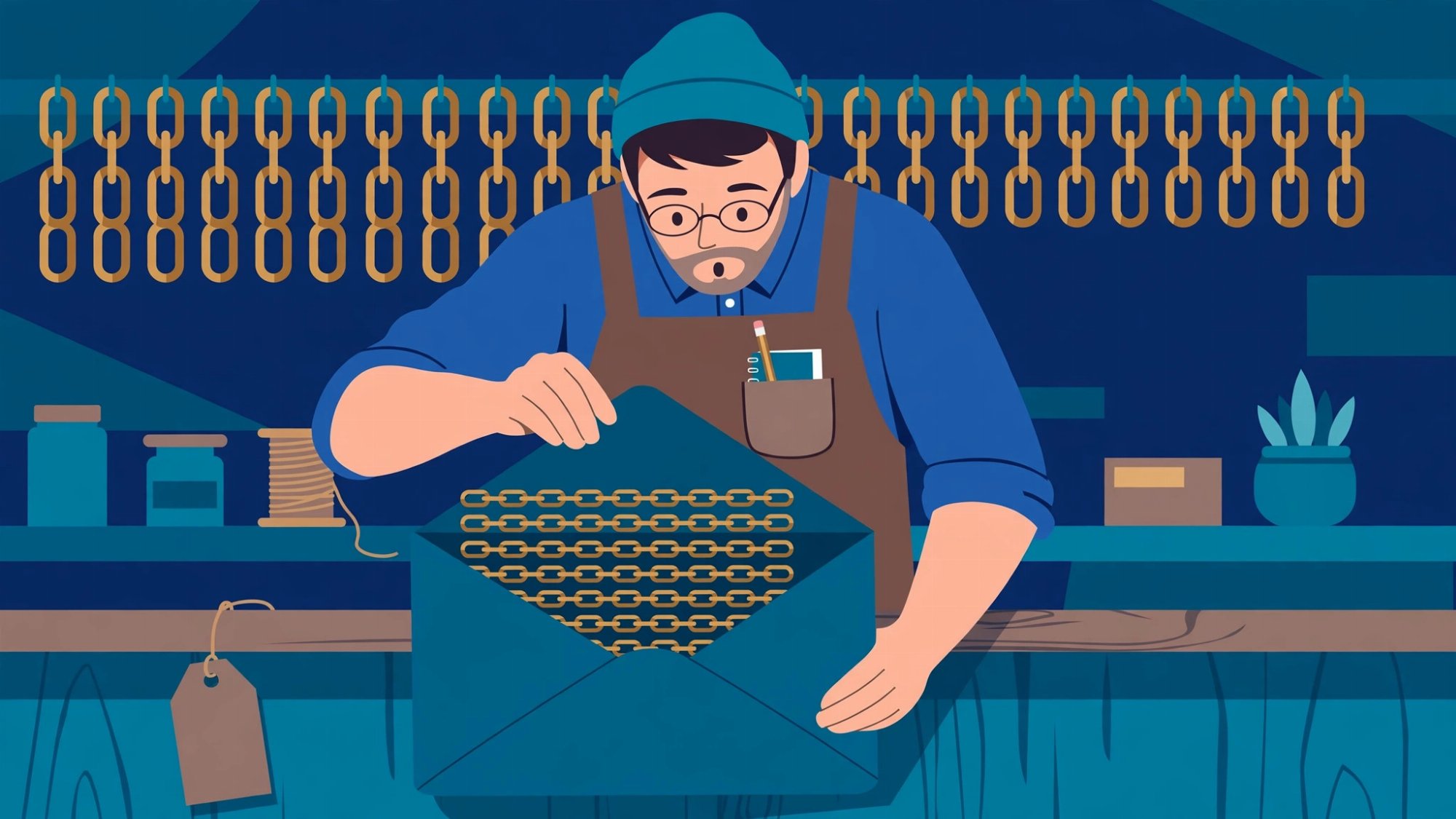
Take the offer from the opening: 100 links for 500 dollars, or 5 dollars per link, delivered in two weeks. Step 1 is the audit. Before a single link goes live, ask where the links will come from. Here, the honest answer is sites with no real traffic, shared hosting patterns, and the same exact match anchor on every link. Those three facts form the footprint SpamBrain looks for when it hunts black hat link building: no readers, shared infrastructure, and identical anchors. A legitimate link profile is messy: anchors vary, sites vary, and links arrive over months. Step 2 is the two outcomes. The common one is silent neutralisation: the links simply stop counting, no notice arrives, and the rankings the buyer expected never materialise. The 500 dollars buys rankings that quietly expire. The rarer outcome is a manual action. The Semrush figure quoted earlier says organic impressions fall 65 percent on average within 30 days. On a site getting 10,000 organic visits a month, that is 6,500 visits gone. On a shop converting at 2 percent with a 40 dollar average order, that is roughly 5,200 dollars of revenue a month, lost because of a 500 dollar package. Step 3 is the recovery. The owner has to disavow the links, remove what can be removed, file a reconsideration request, and wait 2 to 4 weeks for a response, with no guarantee of full recovery. Google's documentation states that ranking benefits from neutralised links cannot be regained. Compare the same 500 dollars spent as 2 editorial guest posts at 250 dollars each on real publications with real readers. Those links are still there in month 12. No ranking gain is promised in either direction, but editorial links keep their value while paid links lose theirs.
How to Spot Black Hat Link Building in a Pitch
Most site owners do not go looking for black hat link building. The tactics come to them, dressed as bargains. Run this check on any pitch first. Step 1, read the price. A single editorial guest post typically costs hundreds of dollars, so a package offering 100 links for 500 dollars cannot be doing that work. Step 2, ask for the sites. A legitimate agency will show you examples of where your links will appear. A black hat seller will refuse or send a list you cannot verify. Open five of the sites yourself: no traffic, no author names, and articles on every topic from crypto to kitchen tiles means a link farm. Step 3, look at the anchor text promise. If the pitch guarantees exact match anchors on every link, walk away. Natural profiles mix brand names, plain URLs, and generic phrases, with only an occasional exact keyword. Step 4, check the timeline. Real outreach takes weeks, because editors reply slowly. A promise of 100 links in two weeks means the links are not going through editors. Step 5, search the seller's own footprint. Search the agency's name alongside words like penalty and review, and read the contract: guarantees of rankings are a red flag, because no honest SEO provider guarantees rankings. Our guide to common SEO mistakes to avoid covers several of these warning signs. Step 6, ask what happens if Google penalises the site. A legitimate provider will talk about risk honestly. A black hat seller will deny the risk. Fail two or more of these checks, and do not buy it.
How to Check Your Own Backlink Profile and Clean It Up
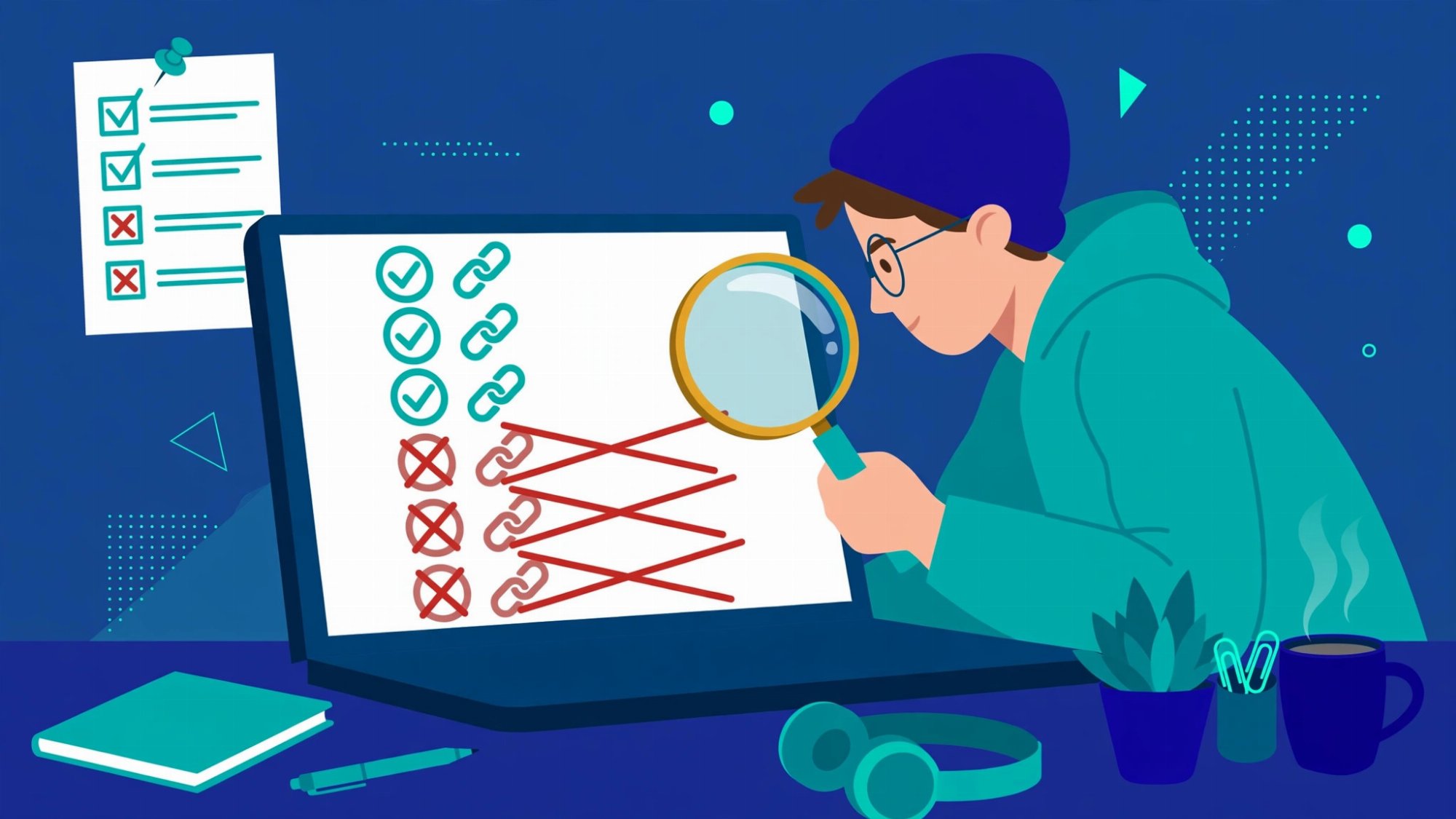
Step 1, pull your backlink list from Google Search Console, which is free, or a paid tool such as Ahrefs or Semrush. Export every referring domain. Step 2, sort by suspicion. Look for domains you do not recognise, domains with no obvious topic, and domains linking to you many times with the same anchor. A real editorial link usually comes once, from one article. Also watch for sudden spikes: hundreds of new links in a single week usually means someone bought links pointing at you. Step 3, open the worst offenders and judge them yourself. Our guide to toxic backlinks explains how to judge individual links. Step 4, try removal first: ask the site owner to remove the link, and keep a record. Step 5, disavow what you cannot remove. Our guide on how to disavow backlinks covers the file format and submission process, and our backlink audit guide covers the full audit. Step 6, repeat the check every quarter, and immediately after hiring any new agency.
Recovering After a Manual Action
Step 1, read the manual action notice in Search Console under Security and Manual Actions. It tells you whether it affects a single page, a section, or the entire domain. A full site manual action removes every page from search results until Google approves a reconsideration request. Step 2, stop the cause: cancel any black hat link building and end the contract. Step 3, audit and clean up every bad link: remove what you can, disavow what you cannot, and log each domain, action, and date. Step 4, file a reconsideration request that is specific and honest: what happened, what you removed, and what you disavowed. A vague request gets rejected. Step 5, wait. Reviews take 10 to 30 days on average. Do not file a second request while the first is pending. Even if the action is lifted, the rankings that depended on the neutralised links will not return on their own.
The Honest Limits of This Warning
Google does not publish a list of detected networks or a count of manual actions, so the 750,000 a month figure is an industry estimate, not Google's number. The most common outcome of black hat link building is silent neutralisation, not a visible penalty, so a buyer may never know when the links stopped counting. The 65 to 85 percent visibility loss figure is one guide's own estimate, and the Semrush 65 percent figure is an average, not a promise about any one site. Recovery takes weeks to months and is not guaranteed. Finally, this article is a warning, not a guide to the tactics: it names them so you can avoid them, and leaves out the detail that would let someone run them.
Frequently Asked Questions
What is black hat link building?
Black hat link building means gaining links through methods that break Google's spam policies, instead of earning them. It includes buying links that pass ranking credit, private blog networks, automated link building programs, excessive link exchanges, hidden links, cloaking, and advertorials with followed links.
What happens if Google catches black hat links?
Most often, SpamBrain silently ignores the links through algorithmic devaluation. The links stop counting, the rankings fade, and no notice arrives. The rarer outcome is a manual action from a human reviewer, which suppresses rankings directly and appears in Search Console. A 2024 Semrush analysis found sites hit by manual link actions lost 65 percent of organic impressions on average within 30 days.
What is the difference between a manual action and an algorithmic penalty?
A manual action is issued by a human reviewer, appears as a notice in Search Console, and has a formal path to recovery: fix the problem, document the cleanup, and file a request. An algorithmic penalty is applied automatically by systems like SpamBrain, arrives with no notification, and has no formal reconsideration pathway. Algorithmic penalties affect an estimated 3.4 times more sites annually than manual actions.
How long does it take to recover from a link penalty?
Recovering from black hat link building takes weeks to months, and recovery is not guaranteed. After fixes are applied and a reconsideration request is filed, reviews take an average of 10 to 30 days. Even when a manual action is lifted, ranking benefits from neutralised links cannot be regained, so the site must earn new, legitimate links. Budget at least two to three months.
Are PBNs black hat?
Yes. A private blog network is a set of sites built or bought to link to a money site, and it is a classic black hat tactic. The network owner controls every site, so every link can be placed with exact anchor text, but that control leaves shared fingerprints across hosting, registration, and content. A single PBN link can sound cheap at 1 to 5 dollars, and a 20 site network costs 5,000 to 15,000 dollars to build, but once Google connects the sites, every link in it can be neutralised at once. Our guide to PBN backlinks covers this tactic in full.
How do I know if an agency is using black hat tactics on my site?
Look for the warning signs of black hat link building: a price far below real outreach costs, a refusal to show you the sites your links appear on, guarantees of exact match anchor text or guaranteed rankings, and hundreds of links delivered in days. Then check the evidence: pull your backlink list from Search Console and look for unrecognised domains, sudden spikes, and dozens of links from one domain with the same anchor. If the profile looks manufactured, ask the agency to explain it. If the explanation does not satisfy you, end the contract and audit the links.
Order guest posts on reviewed websites with honest metrics, or list your own site and get paid.
Join RankPublish