How to Get Backlinks for Free: Methods That Actually Work in 2026
Six free backlink methods with exact steps, a five hour weekly routine, and honest numbers on what each method costs in time instead of money.

Eight months after launching her small online store, Priya had good products, decent traffic from social media, and exactly eleven backlinks. Two were from her own social profiles. She had no budget for an agency and no intention of buying links from a stranger on a forum, so she asked the question every small site owner eventually asks: how do you actually do this without paying? Learning how to get backlinks for free is less about finding a secret trick and more about running a handful of honest methods, week after week, until the links add up. This guide walks through the methods that still work in 2026, with the steps, the numbers, and the part most guides skip: what each method really costs you in time.
If you have read the broader guide on how to get backlinks, you already know links are votes of confidence in Google's eyes. This article is narrower. It answers one question only, how to get backlinks for free, and it answers it method by method. Every method below costs zero money. None of them is instant, and one or two will feel slow for the first month. That is normal, and it is also why so few people stick with them long enough to see results.
What free really means when you learn how to get backlinks for free
Free has a specific meaning here. It means you do not pay for the placement, you do not pay a marketplace, and you do not pay an outreach agency. It does not mean effortless. When people search how to get backlinks for free, they often imagine a list of websites where you paste your URL and leave. Those lists exist, and we keep one ourselves in our roundup of free backlinks you can build this week. Profile and directory links have their place, mostly for a brand new site that needs a basic footprint. But the links that actually move rankings are editorial links, placed inside real content on real sites, and those are earned with work.
So set the right expectation from the start. A realistic exchange rate looks like this: one solid editorial backlink costs somewhere between two and six hours of work, spread across research, creating something worth linking to, and outreach. Some weeks you will earn three links. Some weeks you will earn none and only collect polite rejections. Anyone who understands how to get backlinks for free and does it consistently for six months ends up with a link profile that money alone cannot easily copy, because it was built one real relationship at a time.
The rules that keep free links safe
Before the methods, the guardrails. Google's spam policies treat link schemes as a violation, and that includes some tactics that get marketed as free. Exchanging links excessively with partner pages built only for that purpose, posting in forums purely to drop your URL, and buying or selling links that pass ranking credit are all on the wrong side of the line. Moz's beginner friendly guide to backlinks makes the same point from the other direction: a good link is one a human editor would add because it genuinely helps their readers.
Keep three rules taped to your monitor. First, the page linking to you should be real, indexed, and visited by actual people. Second, the link should sit inside content that is about your topic, not in a footer or a sidebar rolled out across a whole site. Third, your anchor text should mostly be your brand name or a natural phrase, not your money keyword repeated fifty times. Follow those three rules and nearly every method in this guide stays safe by design.
Method one: create something worth linking to
Every other method gets easier once your site holds at least one page that people in your niche would want to reference. Marketers call these linkable assets. You do not need a research department to build one. You need one page that answers a question better, clearer, or with more useful detail than anything else in the results.
Practical formats that earn links on a small budget include an original data roundup from your own customers or orders, a free calculator or template, a detailed how to guide with your own screenshots, and a local resource page that nobody else bothered to make. A plumber in Leeds built a simple page listing emergency shutoff valve locations by housing type, with photos from his own jobs. It was not pretty. It still picked up links from two local news sites and a housing association blog, because it was the only page of its kind.
Here is how to build yours, step by step:
List the ten questions your customers ask most often, from emails, calls, and support chats.
Search each question and open the top five results. Note what is missing: outdated prices, no examples, no photos, no downloadable version.
Pick the question where the gap is biggest and build the page that fills it, using your own numbers and pictures wherever you can.
Add one element that makes linking easy, such as a small chart, a summary table, or a quotable statistic from your own data.
Publish it, then treat it as the target page for the outreach methods below.
This is the slowest method on the list and the most valuable. It is also the foundation of how to get backlinks for free: give people something they genuinely want to reference. One strong asset can keep attracting links for years, long after the hours you spent building it are forgotten.
Method two: broken link building
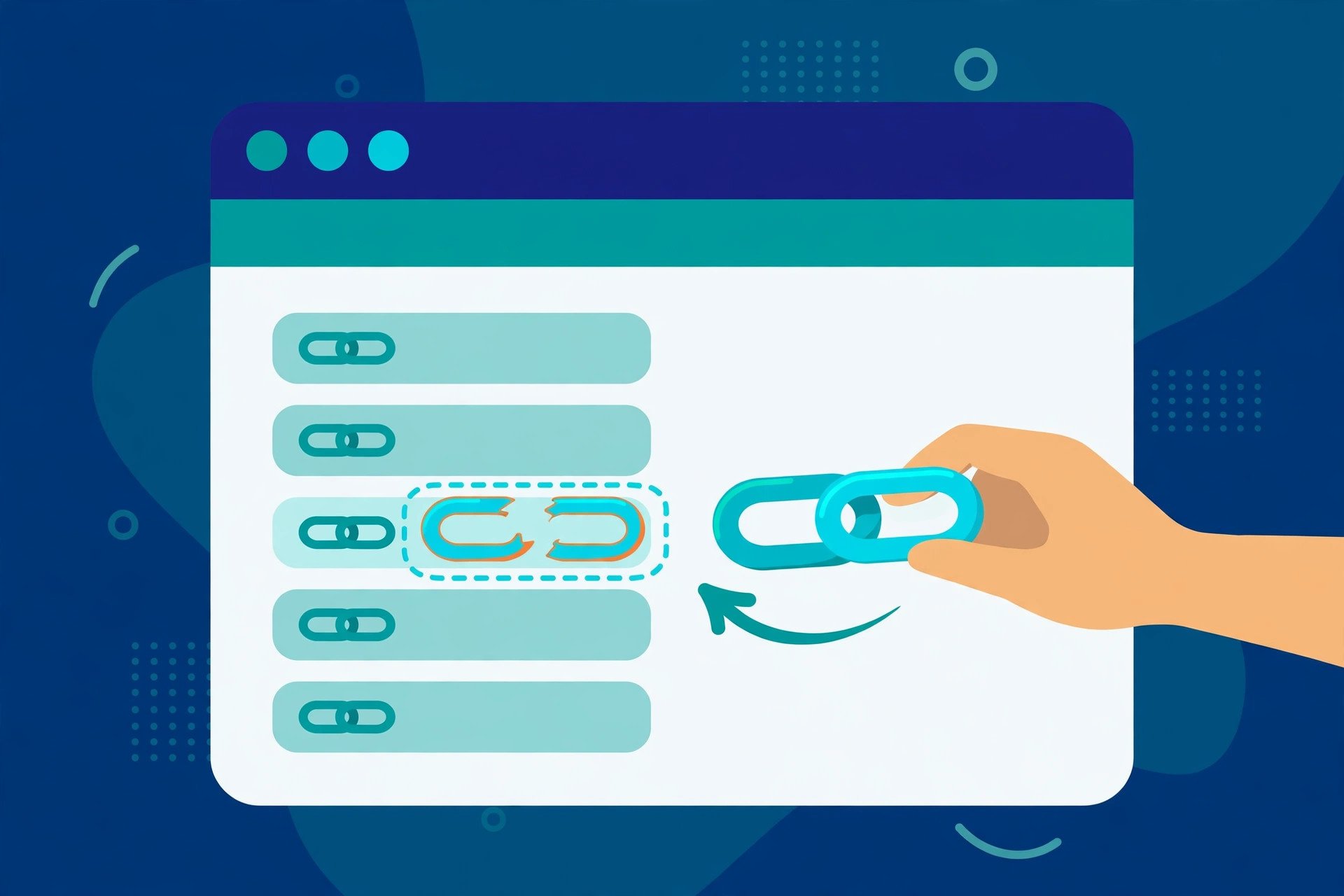
Broken link building is the closest thing outreach has to a fair trade. If you are learning how to get backlinks for free, learn this method early, because it teaches the mindset behind all the others. You find a page in your niche that links out to a resource which no longer exists, you tell the site owner, and you suggest your page as the replacement. You are fixing their problem first and asking second, which is why reply rates beat almost every other cold outreach format. Our full walkthrough of broken link building, step by step covers the tools and scripts in depth. The short version runs like this:
Find resource pages in your niche by searching for phrases like "useful resources" or "helpful links" next to your topic.
Open each page and check its outbound links for dead ones, using a free browser extension or a free checker tier.
Confirm the dead page is really gone, then check whether you have, or can quickly create, a page that covers the same ground.
Email the site owner. Name the exact page, name the broken link, mention what it used to point to, and offer your replacement in one sentence.
Follow up once, after about a week. Then stop. Two emails is persistence, three is a nuisance.
Expect roughly one link for every ten to twenty good emails. That sounds low until you remember the emails take ten minutes each and the links land on established pages that already rank.
Method three: resource pages and curated lists
Thousands of sites maintain curated pages: the best tools for a job, the best guides on a topic, local business directories run by chambers of commerce, reading lists maintained by universities and associations. Getting listed is often free. The catch is that your page has to deserve the slot, which loops back to method one.
The steps are simple. Find the pages with search phrases like "resources" or "best" plus your topic. Read the page properly and check whether your content genuinely fits the theme and the quality level. Then send a short email that does the editor's thinking for them: who you are, the exact URL, the one line description they can paste, and where on their page it would fit. Shortlist style posts in your niche, the "best X for Y" roundups, run on the same logic. Editors update those posts constantly, and a polite note pointing out a genuinely better option gets more replies than most people expect. It is patient, unglamorous work, and it is exactly how to get backlinks for free in a way that lasts, because the editor chose your page on merit.
Method four: journalist requests and expert quotes
Journalists and bloggers working on articles often need a quote, a statistic, or a short expert comment, and they ask for them publicly through services that connect sources with writers. Responding costs nothing but time, and the reward is usually a link from a news site or a well read blog inside a real article. This is one of the most underused answers to how to get backlinks for free, because it does not feel like link building at all. It feels like helping someone meet a deadline, which is exactly what it is.
To do it well, sign up for one or two journalist request services in your niche, read the daily requests, and answer only the ones where you genuinely know the subject. Keep your reply short: two or three quotable sentences, your name, your role, and your site. Journalists pick the response they can paste with the least editing. Ten minutes a day on this, three or four days a week, is enough. Most responses will go nowhere. The one that lands each month or two tends to be the best link in your whole profile.
Method five: guest posting where no money changes hands
Plenty of blogs accept guest posts and charge nothing, because their business model is content and audience rather than selling placements. The trade is simple: you write a genuinely good article for their readers, and your author bio or a natural in text reference links back to you. The quality bar is the whole game. Editors at good sites can smell a spun, keyword stuffed submission in seconds, and they should, because their readers pay the price for it.
Pitch like this. Read three or four recent posts on the target blog so your idea fits its voice. Send a short pitch with two or three specific headline ideas, not a finished article and not a generic offer to write about anything. If accepted, write the best version you can, link to your own page only where it truly helps the reader, and deliver on time. Sites that publish you once and see their readers respond will usually invite you back, and repeat placements from a handful of good blogs beat one off posts on fifty weak ones. This method sits inside most serious link building strategies for a reason: it scales with your writing speed, not your wallet.
Method six: partners, suppliers, and your own backyard
The easiest free links are often hiding inside relationships you already have. Suppliers list their stockists. Software companies list integration partners and certified consultants. Local businesses appear on the pages of the charities they sponsor, the events they cater, and the sports teams whose kits carry their name. Membership bodies, training providers, and the venue that hosted your workshop all publish pages where a link to you makes complete sense.
Make a list of every organisation your business already touches, then check each one's site for a partners, sponsors, members, or community page. Where a listing exists and you are missing, a two line email to someone you already know fixes it. These links rarely have raw power, but they are relevant, they are natural, and they are the links your competitors cannot buy or copy. For a local business wondering how to get backlinks for free, this is the place to start before anywhere else. For a local business, ten of them can matter more than one link from a distant national site.

A weekly routine for how to get backlinks for free
Knowing the methods is not the hard part. Running them every week without a team or a budget is. Here is a routine built for one person with about five hours a week, which is a realistic commitment for a small site owner who is serious about how to get backlinks for free:
Monday, one hour: work on your linkable asset. Add a section, a chart, a better example. Assets are never finished.
Tuesday, one hour: find ten broken links on niche resource pages and send the outreach emails.
Wednesday, one hour: answer journalist requests and pitch one guest post.
Thursday, one hour: find five resource pages or roundups and send short, specific listing requests.
Friday, one hour: check replies, send the week's follow ups, and record everything in a simple spreadsheet: site, contact, date, status, result.
Now the honest arithmetic, as a worked example. Imagine a small training company running exactly this routine. In eight weeks it sends about eighty outreach emails and twenty journalist responses. At typical reply and success rates, that effort produces somewhere between six and ten editorial backlinks, including one from a regional news site through a journalist quote. The money cost is zero. The time cost is forty hours. An agency would charge more than a thousand dollars for a comparable set of placements, which is the real trade at the heart of every free method: you pay in hours instead of invoices.
Does that pace keep working? Yes, with a condition. The routine compounds because each new link makes the site slightly easier to find, slightly easier to trust, and slightly easier to pitch with. The second eight weeks usually outperform the first.
What the data says about pages with no links
In an Ahrefs study of roughly a billion web pages, about two thirds of all pages, 66.31 percent, had no backlinks at all, and a further quarter or so had links from only one website. Read that again. Most of the web is not beating you with clever tactics. Most of the web simply never tried. A site that earns even thirty or forty decent referring domains is already ahead of the overwhelming majority of pages competing for the same searches.
That is the encouraging half of the data, and it explains why how to get backlinks for free rewards persistence over brilliance. The sobering half is that the same research tradition keeps finding a strong relationship between the number of quality referring domains a page has and where it ranks. Links are not the only ranking factor, and a brilliant page with weak links can still lose to a mediocre page with strong ones. Free methods are how a small site closes that gap without pretending the gap does not exist.
The honest limits: free means hours, not zero cost
Time to say plainly what this guide has implied from the start. Every method above is free in money and expensive in hours. Forty hours over eight weeks for six to ten links is a fair planning figure, and some campaigns do worse. A few specific limits are worth knowing before you start.
First, speed is not in your control. An editor might publish your guest post next week or next quarter. A resource page might be updated once a year. Second, rejection is the default outcome of outreach. Most emails are ignored, and a few will be rude. Third, free methods have a ceiling in competitive niches. If your rivals are national brands earning links from major newspapers every week, five hours of outreach will not close that gap on its own, and you will eventually need either a bigger content investment or a budget. Fourth, some offers that arrive dressed as free are not. Sites that ask for a small admin fee, an editing fee, or a reciprocal link on a page built for exchanges are selling something, and the value is usually poor. Finally, never let free link building eat the hours your actual business needs. Links support a business. They are not the business.
None of this makes the methods weak. It makes them honest. For most small and growing sites, learning how to get backlinks for free, and then actually running the routine for two or three quarters, produces a profile strong enough that paid help later becomes a choice rather than a rescue.
Frequently asked questions
How long does it take to see results from free backlinks?
Expect the first links within two to six weeks of consistent outreach, and any ranking movement a few weeks after the links land. Search engines need time to crawl the linking pages and re evaluate yours. Most site owners who learn how to get backlinks for free and stick to a weekly routine see clear movement inside three months, but nobody honest can promise a date.
Are free backlinks as good as paid ones?
A link is judged by the page and site it sits on, not by whether money changed hands. A free editorial link on a relevant, well visited site is worth more than a paid placement on a weak one. The real difference is control: paid placements let you choose timing and anchor text, while earned links arrive on the editor's schedule and wording. That trade applies whether you are working out how to get backlinks for free or paying an agency to do it for you.
How many free backlinks do I need?
There is no universal number, because it depends on what the pages ranking above you have. Check the top five results for your target search and count their referring domains with a free checker. That range is your working target. For most local and niche searches it is far smaller than people fear, often a few dozen decent domains rather than hundreds. When you research how to get backlinks for free, treat that competitor range as your target rather than a number someone on social media invented.
What is the fastest free method?
Broken link building and journalist requests usually produce the first links, because both start with someone else's immediate need. A dead link needs replacing today, and a journalist on a deadline needs a quote today. Asset building is slower to pay off but produces the most links over time, so the strongest routine runs all three together.
Can free backlink methods get my site penalised?
The methods in this guide follow the spirit and the letter of Google's published rules, so the risk is low. Risk appears when free turns into spammy: mass forum signatures, comment links, automated directory submissions, and link exchanges built only for rankings. If a tactic would embarrass you when explained to the linking site's readers, skip it.
Order guest posts on reviewed websites with honest metrics, or list your own site and get paid.
Join RankPublish