Link Building for Nonprofits: How Small Charities Earn Real Links
A small charity does not need a link budget to earn links. It needs one short data briefing, a clear ask to its corporate partners, and a list of resource pages that already want to list it.

A food bank in a mid sized town helps 400 families a week. It has no marketing budget, no SEO agency, and no one on staff who has ever heard the phrase link building for nonprofits. Yet it has something a commercial website would pay thousands of dollars to fake: real work, real numbers, and real people who trust it. Link building for nonprofits turns trust and real world impact into links that other sites want to give. There are no paid placements anywhere in this guide.
Most link building advice assumes a budget, with paid placements and tools that cost more per month than a small charity spends on its website in a year. A charity earns links because its work is real, its numbers are original, and other organisations already want to be seen standing next to it. The job is to make that easy: publish the numbers, ask partners for the link, and get listed where universities, councils, and hospitals keep lists of trusted local organisations.
Why a Small Charity Starts With an Advantage
A link is a vote of trust, and trust is the one thing a charity does not have to manufacture. A local newspaper would rather link to a food bank that fed 400 families last week than to a company blog post about food insecurity.
The advantage shows up in three places. First, original numbers: how many people it helped, how long the waiting list is, which neighbourhoods ask for help most. No other site has those numbers. Second, real relationships with companies, councils, schools, and hospitals, each one a page that could link to the charity, if someone asks. Third, a .org domain with a real mission behind it. One afternoon a week, used the same way every week, will do more than a single frantic month followed by silence. That steady rhythm is the whole method of link building for nonprofits.
What the Numbers Say About the Sector
The Giving USA 2026 report, Giving USA 2026, The Annual Report on Philanthropy for the Year 2025, published by the Giving USA Foundation and researched by the Indiana University Lilly Family School of Philanthropy, reported in June 2026 that total charitable giving in the United States rose 5.7 percent in current dollars, or 3.0 percent adjusted for inflation, to an estimated 617.20 billion dollars in 2025, passing 600 billion dollars for the first time. By source: individuals gave 394.2 billion dollars, 64 percent of the total; foundations gave 117.15 billion dollars, 19 percent; bequests gave 62.2 billion dollars, 10 percent; and corporations gave about 43.7 billion dollars, 7 percent.
Those figures describe the size of the sector and the donor audience, and that is all they describe. They say nothing about links or rankings, and this guide uses them only as context, never as proof that links cause donations. Millions of people, companies, and foundations are already looking for charities they can trust. Corporations gave about 43.7 billion dollars in 2025, 7 percent of the total, so no single company will transform a small charity's funding. What a corporate partner can reliably give, at no cost to either side, is a public link. That link is the first win in link building for nonprofits, and it costs nothing to ask for.
Link Building for Nonprofits: The Three Tactics That Work on a Charity Budget
A guide called Link Building for Nonprofits, published by JoinIndexed and checked on 2026-11-23, names three tactics that work on a charity budget. First, publish original data reports that journalists and researchers cite. Second, require a followed link in every corporate partner announcement. Third, get listed on university, government, and hospital resource pages. Free monitoring covers the rest: Ahrefs Webmaster Tools and Google Search Console, both free, show which sites link to the charity and which mentions have no link.
Each tactic matches a need on the other side. A journalist needs a number to quote. A corporate partner needs a page that proves it supports the community. A university, council, or hospital needs a list of trusted organisations to send people to. Original data comes first: a partner announcement linking to a data briefing beats one linking to a homepage.
Turn Numbers You Already Collect Into a Short Data Briefing
Every charity already collects the raw material for a data briefing. A food bank knows how many families it served last month. A shelter knows how long people wait for a bed. A youth charity knows its waiting list figure. None of those figures need a survey company. They need a spreadsheet, an hour, and a decision to publish.
A good briefing is short, specific, and local. One page is enough. Open with the single most useful number, then give three or four supporting figures, then say plainly where the numbers came from and what period they cover.
Publish the briefing on the charity website as its own page, with a clear title and the date, because link building for nonprofits starts with a page worth linking to. Then send it to 5 local journalists and 3 sector researchers, with a short email that says what the briefing shows, why it matters locally, and where to find it. If the briefing is genuinely local and new, one or two of those eight emails will turn into a link. If none do, the briefing still becomes the resource the charity sends to partners and resource page editors. A data briefing is the simplest form of a linkable asset, and the guide to linkable assets explains the other formats that work the same way.
Corporate Partners: Ask for the Link at the Moment They Say Yes
Corporate partners are the easiest links a charity will ever earn, because the relationship already exists and the company already wants to talk about it. A company that donates money, food, staff time, or a venue will almost always publish something, and every one of those pages can carry a link to the charity. The mistake is never asking, or asking months later, when the announcement is already published.
Ask at the moment the partner says yes. When a company agrees to sponsor an event or send volunteers, reply with thanks and one clear sentence: please link to our website from your announcement, and here is the address. Give the exact page to link to, ideally the data briefing or the programme page.
One detail matters: the link should be a followed link, an ordinary link that search engines count. Some company websites add a tag that tells search engines not to count a link. Ask, politely, for a followed link, and most companies will agree. The JoinIndexed guide names this as a requirement: require a followed link in every corporate partner announcement. If a company refuses, accept the link anyway. Check partner pages once a quarter, because links disappear quietly when companies redesign their websites. That single habit, asking at the moment a partner says yes, is the easiest win in link building for nonprofits.
Resource Pages and the Trust Listings Most Charities Miss
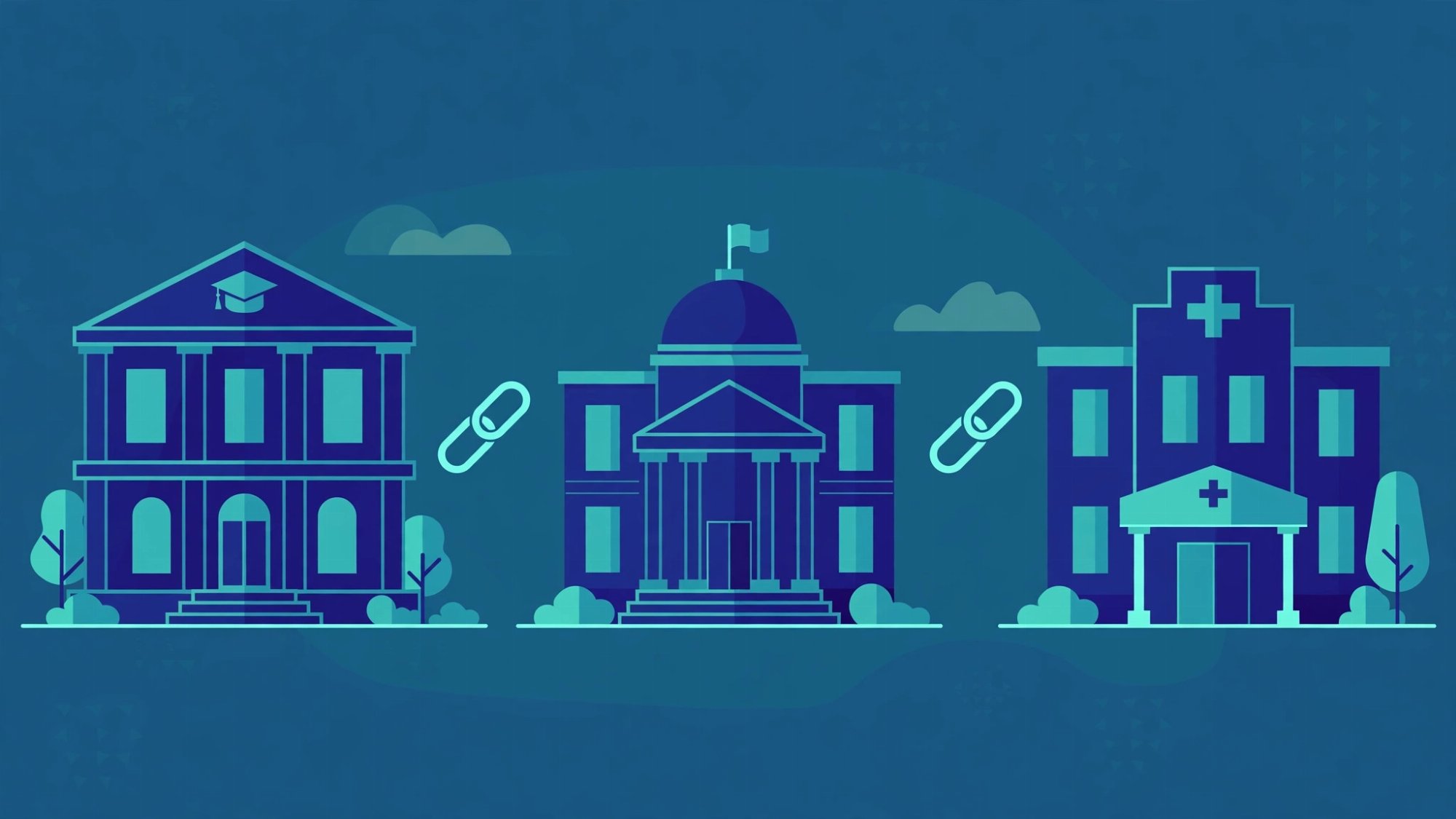
Resource pages are the quietest and most reliable source of links for a charity. A resource page exists to list useful organisations: a university page for students who want to volunteer, a council page for residents who need help, a hospital page for patients and families looking for support. These pages are maintained by people whose job is to keep them accurate, and they welcome suggestions.
The pitch should be short and specific: who the charity helps, where it works, and what the resource is. Give the exact address of the page to link to, and say in one line why it belongs on that list. Ten well matched pitches will do more than fifty generic ones. That selectivity is the discipline of link building for nonprofits: fewer, better pitches.
There is a second group of listings that most charities miss entirely. The JoinIndexed guide names them as the untapped trust listings: state charity registry pages, a complete Candid profile, membership in the state association of nonprofits, university partner pages, local government partnership pages, hospital volunteer programme listings, and government grant recipient pages. A Candid profile, formerly known as GuideStar, is the listing that donors, journalists, and grant makers check first. State registry pages and state association memberships are official lists that link to the charity as a matter of course. None will transform traffic on its own, but together they form a base of trusted links that makes every later link easier to win.
Digital PR and Broken Link Building
Two more tactics deserve a place in a charity's year, and both are free. The first is digital PR: give journalists a story with a human face and a clear number. A guide called How to Build Backlinks for a Charity Website in 2026, published by FoxBusinessMarket, calls digital PR the strongest route for a charity, because journalists love charity stories with human interest and clear data. That is presented here as that guide's advice, not as a measured result. One family the food bank helped, with their permission, plus the briefing number, is a story a local paper can run in a day. The wider method is covered in the guide to digital PR link building.
The second tactic is broken link building, which the same FoxBusinessMarket guide calls a free win because it helps the other site owner while earning a link. Find a page that links to a charity resource that no longer exists, email the site owner, point out the broken link, and suggest the charity's own page as a replacement. Not every email will succeed, but the emails cost nothing. Both tactics share one rule: lead with something useful, not with a request. That rule is what makes link building for nonprofits work without a budget. The same principle sits behind scholarship link building, and a guest post outreach email template is a useful starting point for structure, never a script to copy word for word.
A Three Month Plan for Link Building for Nonprofits
This is a worked example, and its figures are labelled as an illustration, not a promise. Take a small charity with one afternoon a week and no budget, a website, a few corporate partners, and service numbers it already collects.
Month 1 is for the data briefing. In the first two afternoons, the charity turns its own service numbers into a one page briefing. In the third afternoon, it publishes the briefing on its website, with the date and the source of the figures stated plainly. In the fourth, it sends the briefing to 5 local journalists and 3 sector researchers, eight short emails, each naming the single most useful number in the first line.
Month 2 is for partners and trust listings. In the first two afternoons, the charity emails 5 corporate partners and asks each one to include a followed link in its partner announcement or supporters page. In the third afternoon, it checks its Candid profile and its state charity registry listing, and fills in anything missing. In the fourth, it checks which partner pages already link to it, using Google Search Console and the free Ahrefs Webmaster Tools.
Month 3 is for resource pages. The charity lists 10 university, council, and hospital resource pages, and sends each a short pitch with the data briefing as the resource, two or three per afternoon.
Now the arithmetic, labelled as an illustration from benchmark ranges. The Day 26 brief for article 108 cited Web Tonic 2026: warm mention reclamation converts at 15 to 40 percent, and cold link building outreach converts at 3 to 8 percent. Those are industry benchmarks, not measured results for this charity. Apply them to the 10 resource page pitches in month 3: as warm outreach they might bring 2 to 4 links, as cold outreach 0 to 1 links. No link count is promised. A reply is not a placement. Some editors will say no, some will never reply, and a site that says no is left alone. Over three months, a realistic outcome is the published briefing, five partner asks sent, two trust listings completed, ten resource page pitches sent, and most likely two to five new links.
What Link Building for Nonprofits Cannot Do
First, the Giving USA figures describe the United States sector only, and they say nothing about links or rankings. No charity should use them to claim that link building will raise donations.
Second, the Arvow guide, 13 Backlink Building Methods Ranked, published in 2026, ranks NGO and charity links as S tier in the author's own testing, the best return on investment of the 13 methods it covers. The method is donating to a nonprofit, after which most charities publicly thank donors on a supporters page that links back. The author claims that charity domains are often DR 50 to 70 plus with real organic traffic, and that DR 50 plus .org links for 50 to 500 dollars in donations are common. All of that is labelled here as one author's claim and testing, not a measured study. A genuine donation that earns a public thank you link is not the same as buying a link, and this article must never present a donation as a priced link purchase. Google treats links bought or exchanged to manipulate rankings as spam.
Third, the 15 to 40 percent and 3 to 8 percent ranges are industry benchmarks from the Day 26 brief for article 108, which cited Web Tonic 2026, not measured results. They are useful for planning, but they are not a promise.
Fourth, most serious publications restrict links to the author bio. A charity that writes a guest post will usually find that links inside the article are removed, and only a link in the author bio remains. That is normal, not a failure.
Fifth, link building is slow. A charity that earns two or three links a month is doing well, and one that earns none in a month has not failed, if it published something useful and sent its emails. The work compounds over a year. Some of the best links will come from places the charity never pitched.
Frequently Asked Questions
How do nonprofits get backlinks with no budget?
Publish a short data briefing from numbers the charity already collects, and send it to local journalists and researchers. Ask corporate partners for a followed link in their announcements, and pitch university, council, and hospital resource pages. None of those steps costs money.
Do charity links help SEO?
Yes. A link from a university, a council, a hospital, or a respected publication tells a search engine that a real organisation trusts the charity, and charity domains tend to be old and trusted. A link helps most when the page it points to is useful, which is why the data briefing matters.
What is the best link building tactic for a small charity?
Publish one short original data briefing, then use it everywhere. In link building for nonprofits, one good briefing does the work of a dozen pitches. It gives journalists something to cite, corporate partners something to link to, and resource page editors a reason to list the charity.
Can a nonprofit ask corporate partners for links?
Yes, at the moment the partner agrees to help. A company that donates money, goods, or staff time will usually publish an announcement or list the charity on a partners page. Ask for a followed link and give the exact page address.
Are .org links better than .com links?
A .org link is not automatically better than a .com link. What matters is whether the site linking to the charity is real, trusted, and relevant. Do not chase .org domains for their own sake, and be wary of any site that offers a .org link in return for payment.
Should a charity pay for backlinks?
No. A charity should not pay for backlinks, and it should not sell them either. Paid links are against Google's rules, and a charity that buys links risks a penalty. They also waste money a charity cannot afford. The free tactics in this guide earn better links, because they come from real organisations that chose to link.
What to Do in Your Next Afternoon
Link building for nonprofits comes down to a short list: publish a one page data briefing, send it to five local journalists and three researchers, ask five corporate partners for a followed link, complete the Candid profile and the state charity registry listing, and pitch ten resource pages. Check the free tools once a month, then repeat the cycle next quarter.
That is the whole method. It needs no budget, no agency, and no paid placements, just one afternoon a week, a willingness to publish real numbers, and the habit of asking for the link at the moment someone says yes. Start with the briefing, and let the links follow the work.
Order guest posts on reviewed websites with honest metrics, or list your own site and get paid.
Join RankPublish