Press Release Format: The Layout, a Full Example and a Template
The press release layout explained part by part, with a complete fictional example, a copy ready blank template, and the small formatting rules editors notice.
Here is a myth worth correcting before anything else: journalists do not ignore press releases because the news is small. They ignore them because the news is buried. A release that opens with three paragraphs of company history before mentioning the actual announcement forces a busy reader to excavate, and busy readers do not excavate. The press release format exists to solve exactly that problem. It is a layout refined over decades so that the most important fact lands in the first sentence, the supporting detail follows in descending order of importance, and a reader can stop at any paragraph and still know what happened. This guide walks through the press release format piece by piece, shows one complete fictional example written out in full, and ends with a blank template you can copy for your own announcements. It covers format and layout only. If you want the writing process itself, our guide on how to write a press release picks up where this one leaves off.
The press release format at a glance
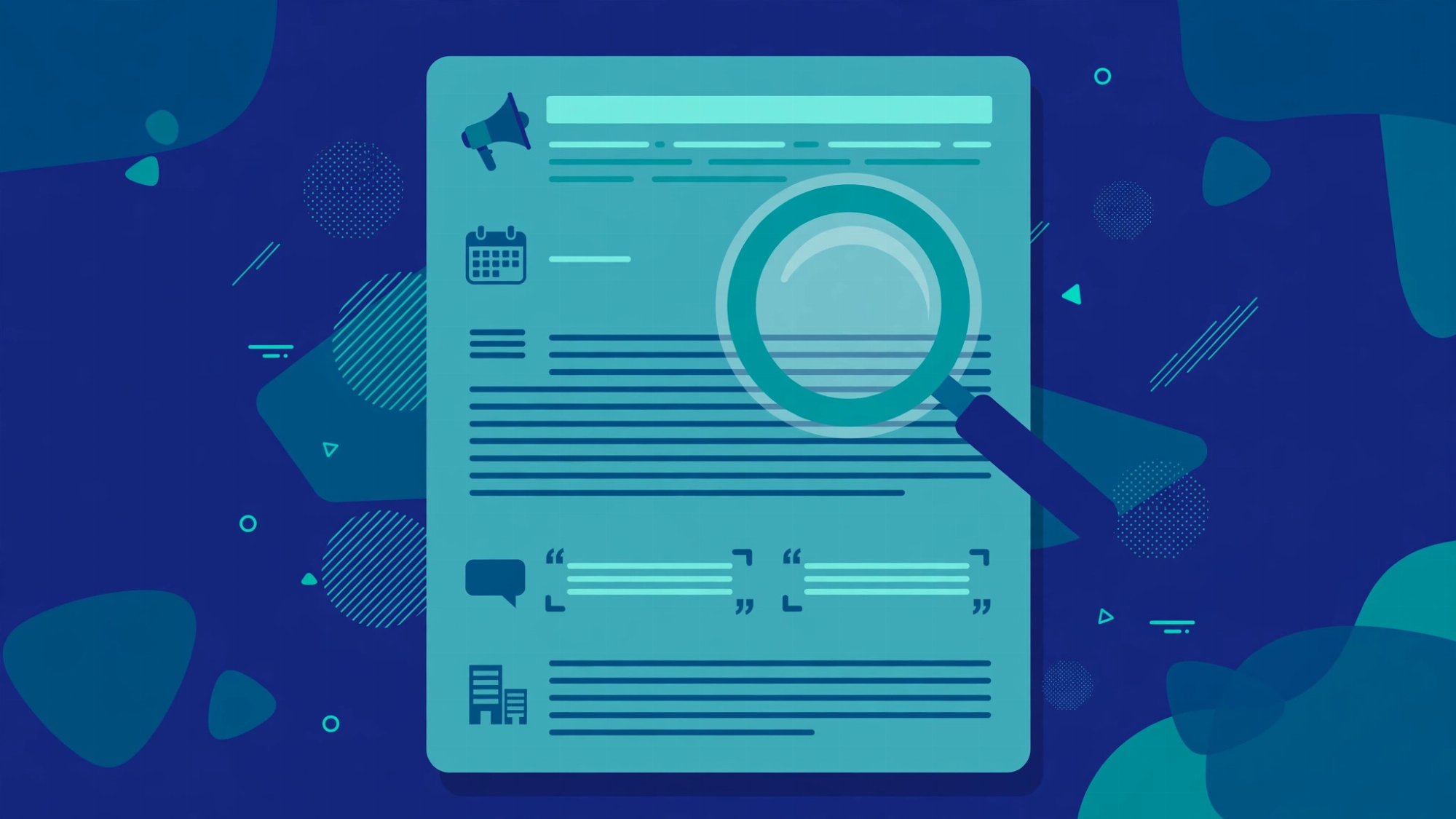
A standard release is built from nine parts, always in the same order. Learn the order once and you can read, or write, any release in the world:
The release timing line, such as FOR IMMEDIATE RELEASE
The headline
The optional subheadline, one line that adds the most useful detail
The dateline: the city, the date, and the organisation name
The lead paragraph, which answers who, what, when, where, and why in two or three sentences
The body paragraphs, in descending order of importance
A quote from a named, relevant person
The boilerplate, a short standing paragraph about the organisation
The contact block, followed by the end mark
That skeleton is the whole press release format. Everything else in this article is about what each part contains, how long it should be, and the small conventions that make a release look professional instead of homemade. None of the parts is optional decoration. Each one exists because a specific reader, an editor scanning forty releases before coffee, needs that information at that exact point.

Each part of the press release format explained
The timing line and the headline block
At the very top, in capitals, sits the timing line. FOR IMMEDIATE RELEASE means the news can be published the moment it arrives. If the story must not run before a set date, the line reads EMBARGOED UNTIL followed by the date and time, and you should only use an embargo you genuinely intend to honour.
The headline follows, and it carries more weight than any other line you will write. Keep it under about fourteen words, state the news as a fact rather than a tease, and name the organisation if it is known enough to matter. "Brightpath Training Opens Free Digital Skills Centre in Leeds" is a headline. "Exciting Announcement From a Leading Innovator" is not, because it announces that something will be announced. A subheadline, when you use one, adds the single most valuable supporting fact, often a number: the size of an investment, the number of people affected, the date something opens.
The dateline and the lead paragraph
The dateline opens the first paragraph and follows a fixed pattern: the city in capitals, then the date, then a dash, then the organisation name, after which the sentence simply continues. It looks like this in practice: LEEDS, England, March 4, 2026, Brightpath Training today opened... The city is where the news is happening, not necessarily where your head office sits.
The lead paragraph is the heart of the press release format and the part amateurs most often get wrong. It must answer five questions, who, what, when, where, and why it matters, inside two or three sentences. If an editor reads nothing else, and many read nothing else, the lead alone should tell them the whole story in miniature. Write it last if you have to. Many professionals do, drafting the body first and then compressing it into a lead once they can see the full shape of the news.
The body paragraphs
After the lead, the body expands the story in descending order of importance, a structure journalists call the inverted pyramid. The second paragraph usually carries the strongest supporting detail: the key figures, the scale, the timeline. Later paragraphs add context, background, and secondary facts. Keep paragraphs short, two to four sentences each, and give every paragraph one job. If a paragraph can be deleted without the story changing, it should be deleted. Most releases run between 300 and 800 words in total, a range the major wire services and resources such as the PR Newswire resource library consistently reflect in their guidance for submitters. Shorter is nearly always stronger. A release that needs 1,500 words is usually two announcements wrestling inside one document.
The quote
Every release needs at least one quote, from a named person with a relevant job title, and the quote must sound like a human being rather than a brochure. Its job is to carry the things the factual paragraphs cannot: judgement, enthusiasm, and the reason the news matters to real people. "We are delighted to announce" says nothing. A quote that explains who benefits, and how, earns its place. Format the quote in its own paragraph, attribute it clearly, and never quote someone saying something they would not say out loud in a meeting.
The boilerplate and the contact block
The boilerplate is a standing paragraph, usually three to five sentences, that describes the organisation in neutral terms: what it does, where it operates, since when, and anything that establishes scale. It sits under a simple heading, often "About" followed by the organisation name, and it stays identical from release to release until the facts change. Write it once, write it carefully, and reuse it.
Below the boilerplate comes the contact block: the name of a real person, their role, an email address, and a phone number. Journalists work to deadlines measured in hours, and a release whose contact is a web form or a generic inbox tells them the organisation is not serious about being asked questions. The document then ends with the traditional end mark, three hash symbols centred on their own line, which signals that nothing follows. On the page you publish on your own site, the same structure applies, and it is worth keeping your releases page itself tidy and readable for search as well, along the lines of Google's SEO starter guide: a clear headline, clean paragraphs, and no clutter around the text.
A complete example, following the press release format exactly
Theory only goes so far, so here is the press release format filled in. The company, the people, and the news below are entirely fictional and were written for this guide. Any resemblance to a real organisation is a coincidence. Read it once for the story, then again for the structure, and notice how the lead paragraph alone carries the whole announcement.
FICTIONAL EXAMPLE, WRITTEN FOR THIS GUIDE
FOR IMMEDIATE RELEASE
Brightpath Training Opens Free Digital Skills Centre in Leeds
New centre will offer 1,200 free course places in its first year
LEEDS, England, March 4, 2026, Brightpath Training today opened a free digital skills centre in Leeds city centre, offering 1,200 course places in its first year to adults who want to retrain for technology and office roles. The centre, on Albion Street, will run daytime and evening courses in office software, data entry, bookkeeping tools, and introductory web skills, with every place fully funded for learners who are unemployed or earning below the regional median wage.
The opening follows a year of employer consultation across West Yorkshire, in which local firms reported persistent difficulty filling administrative and junior data roles. Brightpath designed the course list with twelve of those employers, who have agreed to interview graduates of the longer programmes for entry level vacancies. Courses run from two weeks to twelve weeks, and the first 300 places, starting in April, opened for application today through the Brightpath website and at the centre's reception desk.
"Too many talented people in this city are locked out of good jobs by one missing line on a CV, a spreadsheet course they never had the chance to take," said Amira Shah, Director of Programmes at Brightpath Training. "This centre removes the two barriers we hear about most: cost and confidence. The courses are free, the classes are small, and nobody is expected to know anything on day one."
Brightpath Training was founded in 2016 and provides adult education across West Yorkshire, working with employers, colleges, and community organisations. The Leeds centre is its third site, alongside centres in Bradford and Huddersfield, and takes the organisation's total annual course places to 3,400.
About Brightpath Training
Brightpath Training is an adult education provider founded in 2016 and based in West Yorkshire, England. It runs practical courses in digital skills, bookkeeping, and office administration for adults returning to work or changing careers, and works with local employers to design programmes around real vacancies. Its centres in Leeds, Bradford, and Huddersfield serve around 3,400 learners a year.
Media contact
Daniel Osei, Communications Manager, Brightpath Training
Email: press@brightpathtraining.example
Phone: 0113 000 0000
###
Four things to notice in that example. The headline states a fact and names the organisation. The lead answers who, what, where, when, and why in three sentences. The quote adds judgement and a human voice rather than repeating the facts. And the boilerplate would appear, word for word, at the bottom of every other release the fictional company sends. That consistency is not laziness. It is how editors learn to place you in thirty seconds.
A blank press release format template you can copy
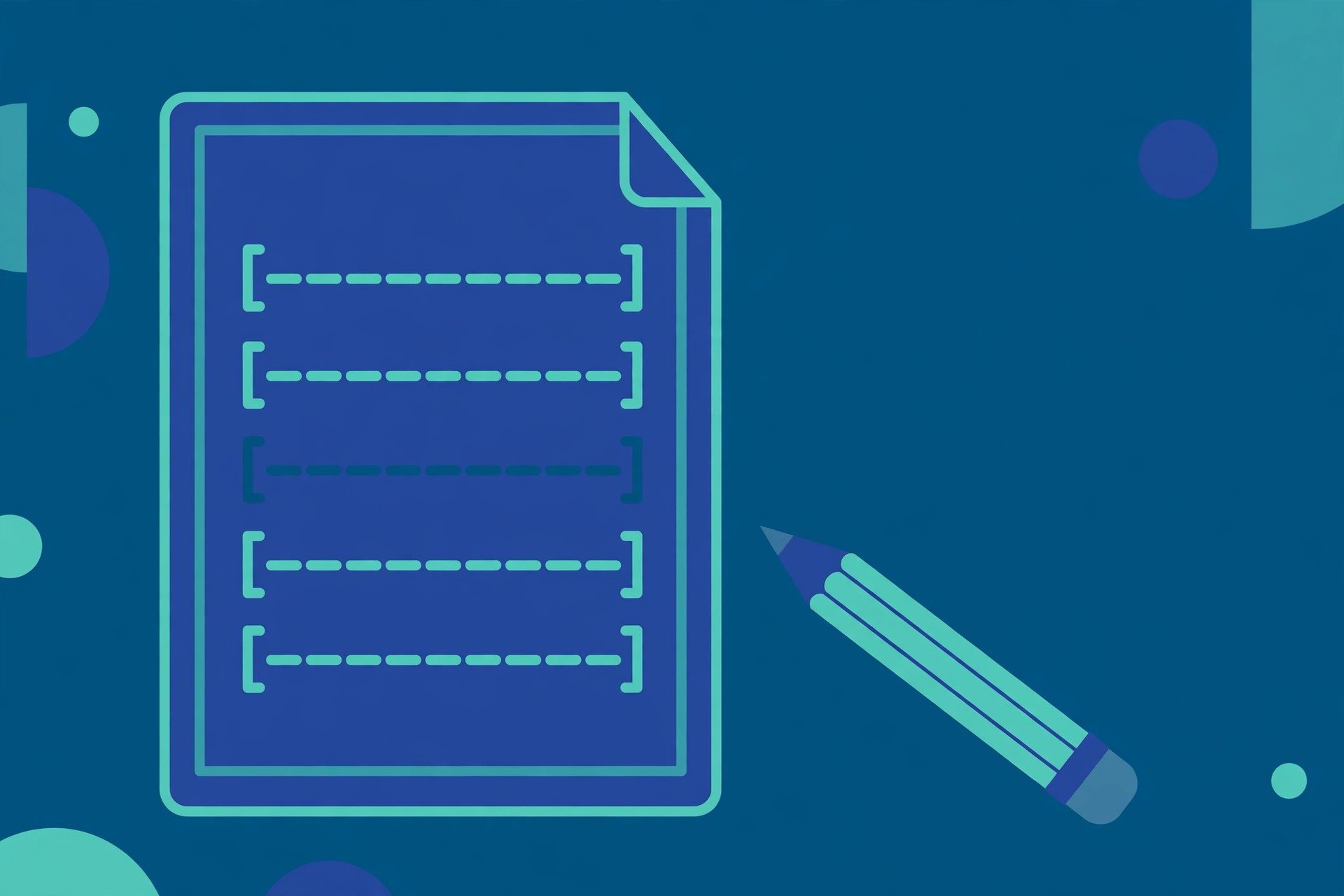
Copy the block below into a document, replace every bracketed line with your own material, and delete the guidance notes before you send anything. The press release format stays identical whatever your announcement is about:
FOR IMMEDIATE RELEASE
[HEADLINE: one factual line, under fourteen words, no hype words]
[SUBHEADLINE: one line adding the strongest supporting fact, often a number. Delete this line if it adds nothing.]
[CITY], [Date], [Organisation name] today [the news, in one clause], [the single most important detail]. [Second sentence: scale, timing, or who is affected.] [Third sentence, if needed: why it matters.]
[Body paragraph two: the strongest supporting detail. Figures, dates, what happens next.]
[Body paragraph three: context and background. How this came about, what it follows, what it connects to.]
"[Quote that adds judgement or human impact, in words the person would actually say]," said [Full name], [job title] at [organisation]. "[Optional second sentence of the quote.]"
[Optional final body paragraph: availability, how to apply, attend, buy, or take part, with dates and the place or page where readers act.]
About [Organisation name]
[Three to five standing sentences: what the organisation does, where, since when, and its scale. Reuse this word for word on every release.]
Media contact
[Full name], [job title], [organisation]
Email: [a monitored inbox belonging to a real person]
Phone: [a number that gets answered]
###
Two habits make the template work in practice. Keep a clean copy with your real boilerplate and contact block already filled in, so no release ever goes out with last year's phone number. And save each finished release as its own dated file rather than overwriting the last one, because six months later someone will ask exactly what you announced, and the file is the only reliable witness. If you are also deciding where a finished release should go, our comparison of press release distribution sites and our plain English walkthrough of press release distribution cover that side of the work.
Small formatting rules that separate professionals from amateurs
Beyond the structure, a handful of small conventions signal competence. None of them changes the press release format itself, but all of them change how seriously a reader takes the document in front of them. Use one font and one size throughout, with bold reserved for the headline and the About heading. Leave a blank line between paragraphs instead of indenting. Write numbers as numerals from ten upward in body text, and spell out one to nine, following common newsroom style. Put dates in full, March 4, 2026, never in ambiguous all number form. Never write a headline in all capitals; it reads as shouting and some systems will mangle it. Keep the organisation's name spelled identically everywhere, including the boilerplate, because inconsistent naming is the single most common error in releases from small organisations. And proofread the contact block twice. A perfect release with a wrong phone number is a story that cannot be followed up, which makes it barely a release at all.
The honest limits of format
The press release format is a container, and a container cannot rescue weak contents. A perfectly formatted release about news nobody needs will still be ignored, politely and completely. Format also cannot substitute for relationships: a release sent cold to a generic list performs very differently from the same document sent to a journalist who knows your organisation, and no layout trick closes that gap. There is a time cost too. A careful first release, including drafting the boilerplate and getting the quote approved by the person named, realistically takes three to five hours. Later releases reuse the boilerplate and the template and drop to an hour or so, but the first one is a genuine piece of work. Finally, be honest about what a release can carry. It announces news. It does not argue, persuade at length, or tell your whole story, and releases that try to do all four jobs usually do none of them. Accept those limits and the format will serve you well for years, because it was designed by people who read forty of these before coffee and kept only what worked. That, in the end, is the real strength of the press release format: it organises news honestly, and it never pretends to create news where none exists.
Frequently asked questions
How long should a press release be?
Between 300 and 800 words covers almost every genuine announcement, with the lead and the headline doing the heavy lifting. Whatever the length, keep the press release format intact from timing line to end mark, because a short release in the full format reads as professional while a long one missing pieces reads as careless. If your draft runs past 900 words, look for a second announcement hiding inside it, or for background that belongs on your website rather than in the release. One page, cleanly spaced, is the traditional target.
What goes first in the press release format?
The timing line, FOR IMMEDIATE RELEASE, sits at the very top, followed by the headline, the optional subheadline, and then the dateline opening the lead paragraph. The order never changes, and that predictability is the point: a reader who has seen a thousand releases knows exactly where every fact lives in yours.
Do I still need the end mark and the boilerplate?
Yes to both. The boilerplate saves every reader from having to ask who you are, and it keeps your organisation's description consistent across every story written about you. The end mark, three hash symbols, is a small courtesy that confirms the document is complete, and editors still notice when it is missing from a multi page release.
Can I use this press release format for a product launch?
Absolutely. The format is announcement neutral: launches, appointments, openings, results, events, and partnerships all use the same skeleton. Only the contents of the lead and the body change. For a launch, the lead carries the product name, the launch date, and the price or availability, and the quote usually comes from the person responsible for the product.
Should the release on my own website look the same?
Keep the same structure, headline, dateline, lead, body, quote, boilerplate, and contact, because visitors and search engines alike read it the same way journalists do. You can add a relevant image and links to the pages mentioned, which a printed release cannot carry, but resist turning it into a sales page. Its credibility comes from staying recognisably a release.
Order guest posts on reviewed websites with honest metrics, or list your own site and get paid.
Join RankPublish