Paid Backlinks Sites: How to Tell a Real Seller From a Trap
Paid backlinks sites compared honestly: real prices from published studies, seven red flags, five green flags, and a vetting routine before you pay.

A paid backlinks site promises you a link on a real website, quickly, for a price you can see up front. Some of them deliver exactly that. Many of them deliver something else: a link on a site that exists only to sell links, a link that disappears in three months, or a link that puts your own site on Google's radar for the wrong reason. The difference between a real seller and a trap is rarely the price. It is the site, the process, and what the seller is willing to show you before you pay.
This guide is about telling the two apart, so you can use paid backlinks sites without becoming their easiest customer. It gives you the real prices from published studies, so you know when a quote is honest and when it is a lure. It lists seven red flags that should end a deal, five green flags that mean a seller is worth a closer look, and a vetting routine you can run in under an hour. If you are new to buying links, read our guide on how to buy backlinks safely first, because it covers the basics this guide builds on, and read our guide on how to choose backlinks worth paying for, which explains how to judge a single placement on its own merits.
What paid links actually cost, according to published studies
The first test of any paid backlinks site is whether its prices match reality, and comparing paid backlinks sites against published benchmarks is the fastest first check you can run. The studies below are the benchmarks the industry itself uses, and a seller whose prices sit far outside them is either selling something worthless or hiding the real cost.
Ahrefs ran a small outreach test in which it asked 450 sites across nine competitive niches to sell a link in an existing post. The average price for those paid niche edits was 361.44 dollars, and paid guest posts in the same test averaged 77.80 dollars. Only 12.6 percent of the sites asked were willing to sell a link at all. That last number matters more than the price. Most real sites do not sell links, so a seller offering you a link on any site you name is probably not selling what it claims.
BuzzStream's 2025 pricing analysis put the average guest post link at 365 dollars, with high quality posts averaging 930 dollars based on traffic and authority, and prices rising from 113 dollars for low authority sites to 461 dollars for sites with a Domain Rating above 80. A separate survey of practitioners, reported by Editorial.Link, found the average price SEOs consider acceptable for one high quality backlink is 508.95 dollars. And a 2026 collection of 261 one off prices quoted directly by publishers to MentionAgent users between July and September 2026 found a median asking price of 150 dollars per link.
Read those numbers together and a clear picture appears. A single real link on a real site usually costs between 150 and 500 dollars, with the price rising with the site's traffic and authority. A seller offering 100 links for 50 dollars is not selling 100 links worth having. It is selling 100 links that Google can spot as a pattern, and that is the most expensive kind of link there is, because it can cost you rankings you already have.
What you are buying | Published benchmark | Source and date |
|---|---|---|
Paid niche edit, average | 361.44 dollars | Ahrefs outreach test, 450 sites, data from 2018, page updated July 2024 |
Paid guest post, average | 77.80 dollars | Same Ahrefs test |
Guest post link, average | 365 dollars | BuzzStream 2025 pricing analysis |
High quality guest post | 930 dollars average | BuzzStream 2025 pricing analysis |
Acceptable price for one high quality link | 508.95 dollars average | Editorial.Link practitioner survey, May 2026 |
Publisher asking price, median | 150 dollars | MentionAgent, 261 quotes, July to September 2026 |
Sites willing to sell a link at all | 12.6 percent | Ahrefs outreach test, 450 sites |
One warning about the Ahrefs figures: the 361.44 dollar average comes from data collected in 2018, and it still appears in 2026 guides because few studies since have measured the same thing as carefully. Treat it as a benchmark for the shape of the market, not as a current quote. Prices have risen since then, which is why the 2026 median of 150 dollars from publishers and the 365 dollar average from BuzzStream matter more for budgeting today.
Seven red flags that should end the deal

Run through this list before you pay anything to any of the paid backlinks sites on your shortlist. One red flag is a warning. Two is a reason to walk away.
1. The price is impossibly low. A hundred links for 50 dollars, or a Domain Rating 70 link for 20 dollars, is not a bargain. It is a link farm, a private blog network, or a hacked site. Real sites with real traffic charge real money, and the table above shows what real money looks like.
2. The seller will not name the site before you pay. A real seller tells you the domain, lets you check it yourself, and accepts that you might say no. Among paid backlinks sites, the ones who hide the domain are hiding the quality, because the quality would end the sale.
3. The site has no traffic and no readers. Check the site in a free backlink checker and look at its own links and its traffic. A site with no organic traffic, no real articles, and hundreds of outbound links to unrelated topics is a link farm. Our guide on how to check any website's backlinks for free explains the checks, and it takes ten minutes.
4. Every article is a guest post. Open the site's recent articles. If every one is written by a different author, on a different topic, with a commercial link in it, the site has no audience of its own. It exists to sell placements, and Google treats sites like that as a pattern, not as publishers.
5. The seller guarantees rankings or a specific position. Nobody can guarantee a ranking, because nobody controls Google. A guarantee is a promise the seller cannot keep, and it tells you everything about how the seller does business.
6. The seller asks for exact match anchor text on every link. A natural link profile mixes brand names, plain URLs and descriptive phrases. A seller who insists on the same commercial anchor on every placement is building a footprint Google can read at a glance. Our guide to anchor text for backlinks explains the ratios that look natural.
7. The link is permanent until it is not. Ask how long the link stays live, and get the answer in writing. Many cheap placements disappear after three to six months, when the seller removes the article or lets the domain expire. A link that vanishes is money spent on nothing, and a pattern of vanishing links is a signal in itself.
Five green flags that mean a seller is worth a closer look
Red flags tell you what to avoid. Green flags tell you what to look for, and among paid backlinks sites, a seller with three or more of these is worth the hour it takes to vet them properly.
First, the seller names the site, shows you the article it will appear in, and lets you check both before you pay. Transparency is the single best predictor of quality in this market.
Second, the site has real traffic from search, real readers, and articles on one topic, not twenty. A site about plumbing that links to a plumber is a natural placement. A site about everything that links to everyone is not.
Third, the seller talks about relevance before price. A good seller asks what your site is about and turns down placements that do not fit, because a bad fit hurts their sites too.
Fourth, the seller offers a report with the live URL, the anchor used, and the date, and answers questions after the link goes live. Aftercare is rare in this market, and it is worth paying for.
Fifth, the price sits inside the published bands in the table above. A price of 200 dollars for a link on a site with 10,000 visits a month is believable. A price of 20 dollars for the same link is not, and a price of 2,000 dollars needs a site with serious traffic to justify it.
How to vet a seller in under an hour
Use this routine on every one of the paid backlinks sites you consider, even the ones a friend recommended. It takes under an hour, and it saves the money a bad placement costs.
Step 1: Ask for the domain and the target page. Do not discuss price until you have both. A seller who will not name the site is a seller you have already vetted.
Step 2: Check the site yourself. Open it and read three recent articles. Check its traffic and its own backlinks in a free checker. Look at its outbound links: are they to real sites on the same topic, or to casinos, pharmacies and essay mills? A site that links to everyone will link to you for a week and then to someone else.
Step 3: Check the placement. Ask which article your link will appear in, and where in the article. A link in the body of a relevant article is worth paying for. A link in a footer, a sidebar, an author box, or an article written only to hold links is not.
Step 4: Agree the terms in writing. The price, the anchor text, the article, the date, and how long the link stays live. Ask what happens if the link is removed within twelve months. A seller who will not put terms in writing will not honour them later.
Step 5: Pay in a way you can trace, and keep the receipt, the emails, and the live URL. If the link disappears, you need the record to chase it. If Google ever asks about your links, and it rarely does for a small site, you need the record to show what you bought and when.
A worked example: two sellers, one budget, different outcomes
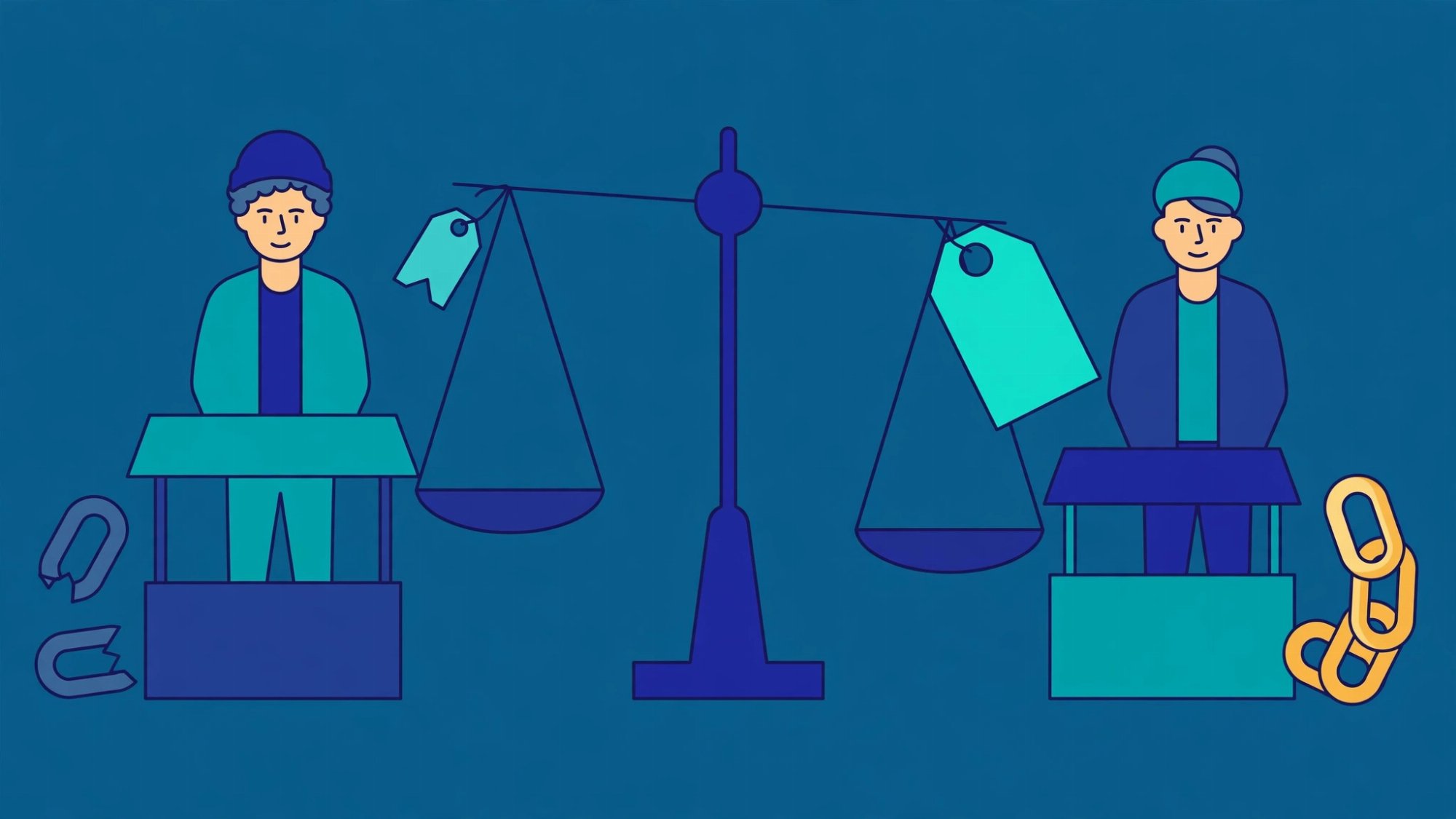
Take a small plumbing business with 300 dollars to spend on one link, using sample figures to show the method. Two paid backlinks sites offer a placement.
Seller A offers a link on a plumbing blog with 8,000 visits a month, for 250 dollars. The blog publishes two articles a week, all about plumbing, all by two named authors. The link will sit in the body of an article about water heaters, with your brand name as the anchor. The seller names the site before you pay, sends a report after publication, and guarantees the link stays live for twelve months.
Seller B offers a link on a general news site with a Domain Rating of 72, for 60 dollars. The site publishes forty articles a day on every topic, all by guest authors. Your link will sit in a new article written for the placement, with exact match anchor text for "emergency plumber near me". The seller will not name the site until you pay, and the link has no stated lifetime.
The right choice is Seller A, and the numbers explain why. Its price of 250 dollars sits inside the published bands for a site of its size. Its traffic is real and relevant, its authors are real, and its terms are written down. Seller B is cheaper because its link is worth less. That is the pattern to watch for across paid backlinks sites: the cheapest offer is usually the one selling the weakest link. A Domain Rating of 72 on a site with no focus and no readers is a number, not an audience, and a new article written only to hold your link is the exact pattern Google's spam policies describe as link spam. Google publishes those policies openly, and they are worth reading before you buy anything, because they describe in plain language what counts as manipulation.
The worked example also shows the arithmetic of the decision. Seller A costs 250 dollars for one link that is likely to still be live in a year. Seller B costs 60 dollars for a link that may be gone in three months and may bring a penalty with it. The cheap link is the expensive one.
For a fuller comparison of buying versus earning links, read our comparison of guest posts and link insertions, which explains when a paid placement makes sense and when outreach earns a better link for the same effort.
What happens if Google catches you
Buying links breaks Google's spam policies, and Google says so directly: links intended to manipulate rankings, including buying and selling links, are a form of link spam. Paid backlinks sites exist because that rule is unevenly enforced, not because the rule is unclear. That does not mean every paid link is caught. It means the risk is real, and you should understand it before you pay.
The usual consequence is not a penalty notice. It is quieter than that. Google simply stops counting the link, so the money buys nothing. The worse consequence is a manual action, where a human reviewer at Google decides your site manipulated its rankings and removes some or all of it from search results. A manual action can be lifted, but only after you remove the offending links and file a reconsideration request, which takes weeks and costs far more than the links ever did.
Three things reduce the risk, and none of them removes it. Buy fewer links, and buy them on relevant sites with real traffic. Vary your anchors, so your profile looks like a site that earned links rather than bought them. And never buy links in bulk from one seller, because a pattern of identical placements is the easiest thing for Google to spot. The honest version of this advice is simple: if you cannot afford to lose the rankings the links might bring, do not buy links you cannot defend.
The honest limits of paid backlinks sites
Paid backlinks sites have four limits that no vetting routine can remove.
First, you are renting trust, not owning it. A link you bought can be removed, the site can change hands, or the site can be penalised itself, and any of those takes your link with it. An earned link on a site that chose to link to you is sturdier than a bought link on a site that was paid to.
Second, the market is mostly unregulated. There is no licence, no regulator, and no refund scheme for link sellers. If a seller takes your money and disappears, your only remedy is a payment dispute, and most sellers know it.
Third, prices are not the quality signal they seem to be. An expensive link on a bad site is still a bad link, and a cheap link on a good site is still a good link. Price tells you what the seller thinks the link is worth, not what Google thinks it is worth.
Fourth, a paid link strategy does not compound. Each link costs money, and the day you stop paying is the day your profile stops growing. Earned links, from content people actually want to reference, keep arriving after the work is done. That is why the best use of a paid placement is as a supplement to earned links, never as a replacement for them.
Frequently asked questions
Are paid backlinks sites legal? A1: Buying and selling links is not illegal in the usual sense, and nobody will take you to court for it. It does break Google's spam policies, which is a different kind of rule: the consequence is losing rankings, not paying a fine. That distinction matters, because it means the risk is to your site, not to your liberty.
How much should I pay for one backlink? A2: When you compare paid backlinks sites, the published benchmarks say 150 to 500 dollars for a real link on a real site, with the price rising with traffic and authority. Our what a guest post costs gives the same picture in traffic bands, from 75 to 150 dollars for small sites up to 600 to 1,500 dollars for sites above 75,000 visits. Below 50 dollars, be suspicious. Above 1,000 dollars, ask what makes the site worth it.
Can Google tell if I bought a link? A3: Sometimes, and more often than sellers admit. Google looks for patterns: many new links at once, identical anchors, links from sites that link to everyone, and links in articles written only to hold them. One careful placement on a relevant site is hard to spot. Fifty placements from one seller are not.
Should I buy links from Fiverr or a marketplace? A4: Marketplaces can be legitimate, and our guide to guest post marketplaces explains how to use them. The same rules apply: name the site before you pay, check it yourself, and walk away from prices that make no sense. A marketplace does not vet sellers for you.
What should I do if I already bought bad links? A5: Do not panic, and do not pay someone to remove them all at once. Check which links are actually harmful using the checks in our guide on how to choose backlinks, remove the ones you can, and use Google's disavow tool only for the links you cannot remove and that clearly break the rules. Most small sites with a few bad links need no action at all beyond stopping the buying.
The bottom line
Paid backlinks sites are not all traps, but the traps are common, cheap, and easy to fall into. Judge a seller by the site, not by the sales page. If the seller names the site, the site has real readers, the price sits inside the published bands, and the terms are in writing, the placement may be worth it. If the seller hides the site, promises rankings, charges 20 dollars for a link worth 300, or insists on exact match anchors everywhere, walk away. The most expensive link you will ever buy is the cheap one that costs you your rankings.
Order guest posts on reviewed websites with honest metrics, or list your own site and get paid.
Join RankPublish